When discussing the ROI of a wind turbine, most conversations begin—and end—with a simple question: How many years until it pays for itself?
It is a reasonable starting point. In a scenario without subsidies, feed-in tariffs, or tax incentives, a client pays the full investment cost. The turbine is installed, connected, and begins generating electricity. The owner reduces purchases from the grid and calculates annual savings. Divide total investment by annual savings, and you have your payback period.
In many realistic conditions, that period may range from 6 to 12 years, sometimes longer depending on wind resources, electricity prices, and system size. On paper, it looks like a long-term infrastructure investment rather than a quick financial win.
But stopping the analysis there overlooks something essential. Return on investment in energy systems is not only about savings. It is also about protection.
The Standard ROI Model: Energy as a Cost
The classical approach to evaluating a small wind turbine is based on avoided electricity purchases. The logic is straightforward:
- • The turbine produces a predictable annual output.
- • Each kilowatt-hour generated offsets grid electricity.
- • The savings depend on the local electricity tariff.
- • Maintenance costs are factored into the calculation.
Under this model, the wind turbine is treated purely as a cost-reduction tool. The slower the wind speeds or the lower the electricity prices, the longer the payback. For some households or businesses, that long-term horizon is perfectly acceptable. Energy infrastructure, after all, is typically designed to operate for decades. A 20-year lifespan with a 7–10 year payback can still represent a rational investment. However, this model assumes one critical condition: that the grid is always available. And that assumption is no longer guaranteed.
The Hidden Variable: Cost of Downtime
In many sectors, electricity is not merely an operational cost. It is a functional requirement.
Consider installations such as:
- • Dairy farms operating automated milking systems
- • Cold storage facilities preserving perishable goods
- • Agricultural irrigation systems
- • Manufacturing workshops with CNC equipment
- • Remote clinics or medical storage facilities
In these environments, a power outage does not simply pause operations. It creates immediate losses.
Spoiled inventory, interrupted production cycles, damaged equipment, contract penalties, and safety risks can quickly accumulate. In some cases, even a few hours without electricity can result in significant financial damage.
Now imagine a small wind turbine integrated with energy storage that maintains critical loads during a grid failure. The ROI calculation changes fundamentally. If a single avoided blackout prevents losses equivalent to several years of projected electricity savings, the investment has effectively accelerated its return in one event.
This is not theoretical. Increasing grid congestion, extreme weather events, and regional infrastructure stress have made outages more common across many regions. Energy resilience is no longer a luxury, but a business continuity strategy.
Wind Turbines as Part of Energy Security Infrastructure
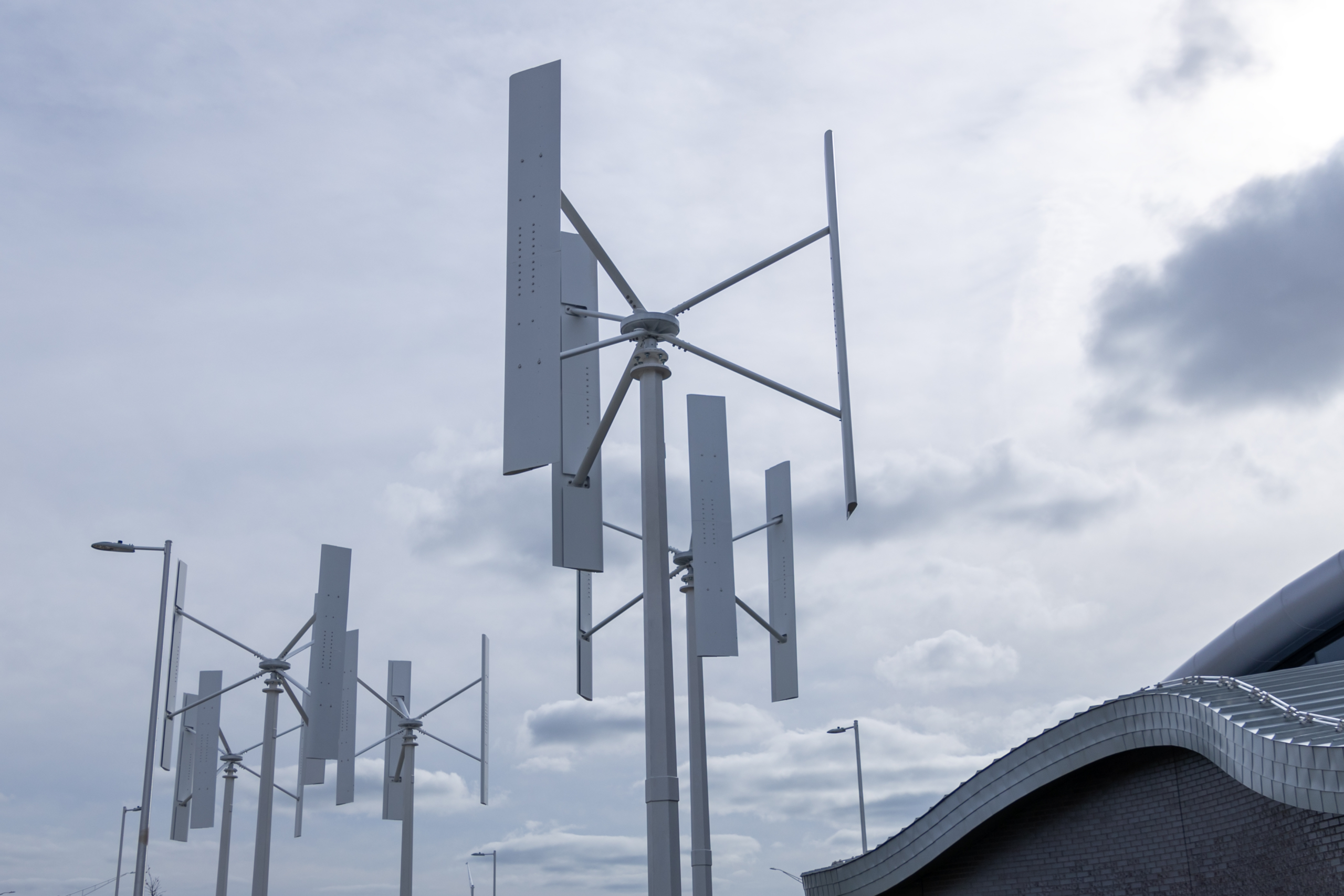
A small wind turbine should not be understood as a decorative renewable device or a niche solution for technology enthusiasts. It is an infrastructure.
When combined with storage, it becomes:
- • A decentralized energy source
- • A resilience mechanism
- • A risk mitigation tool
- • A stabilizer against volatile electricity markets
Unlike diesel generators, wind systems operate without fuel dependency. They generate power whenever wind is available—often precisely during storm conditions when grid disruptions are more likely. For rural and semi-rural installations, where grid restoration may take longer, this independence is particularly valuable. The financial return may unfold gradually through energy savings. But the strategic return—energy autonomy and operational continuity—can materialize instantly when needed.
Households: Beyond Cost Savings
For modern households, electricity is deeply integrated into daily life. Heat pumps, water pumps, refrigeration, communication systems, security infrastructure, and increasingly electric vehicle charging all depend on reliable power.
During winter conditions, even a short outage can affect heating and water supply. For families in remote areas, this becomes more than inconvenience—it can impact safety.
A wind turbine complements solar generation by producing energy at night and during windy winter periods when solar output is lower. In a hybrid configuration with storage, essential loads can remain powered independently of grid availability.
The long-term ROI may still follow a traditional payback curve. Yet the value of uninterrupted heating, communication, and refrigeration during a critical event is not easily reflected in a spreadsheet.
Rethinking ROI: Financial and Strategic Perspectives
Traditional ROI calculations answer one question: “How long until this system pays for itself?”
A more comprehensive perspective asks an additional question: “What is the cost of not having it?”
This broader evaluation includes:
- • Avoided downtime losses
- • Protection of goods and equipment
- • Reduced exposure to energy price spikes
- • Greater operational predictability
- • Enhanced property and asset value
- • Increased resilience in uncertain conditions
For businesses, this is closely aligned with standard risk management practice. Companies routinely invest in fire suppression systems, security infrastructure, and backup solutions not because they expect direct financial gain, but because the potential loss without them is unacceptable. Energy infrastructure deserves similar consideration.
Long-Term Economics, Immediate Protection
In purely financial terms, a wind turbine may require years to reach its full payback when no incentives are available. That reality should be acknowledged transparently.
Yet focusing solely on annual electricity savings overlooks its dual function.
A wind turbine is both:
- 1. A long-term cost stabilizer
- 2. A safeguard against disruption
In stable conditions, it gradually reduces dependency on external suppliers. In unstable conditions, it becomes an active shield for operations and safety.
This dual nature is what makes small wind systems increasingly relevant—not as lifestyle accessories, but as serious infrastructure components.
Conclusion: More Than a Green Investment
The ROI of a wind turbine cannot be reduced to a single number of years. It depends on wind conditions, electricity prices, and system design. But it also depends on how critical uninterrupted energy is for the installation in question.
For some projects, the return unfolds steadily over a decade. For others, it may become evident the moment the grid fails and operations continue uninterrupted. A wind turbine is not a hobby device. It is not merely a sustainability statement.
It is an element of resilience, independence, and long-term operational security—for businesses and households alike. And in an increasingly unpredictable energy landscape, that kind of return may prove more valuable than any spreadsheet can show.