From 1 January 2027, the Dutch salderingsregeling (net metering scheme) will end. That change will quietly but fundamentally alter the economics of residential and small-business solar. Until now, many solar owners could treat the grid as a “virtual battery”: surplus electricity exported during the day was effectively credited back at retail value when electricity was consumed later. When this 1:1 offset disappears, the value of midday surplus power falls, and the timing of production starts to matter again.
In practice, the post-2027 model will reward households that can use more of their own generation on site. Exporting electricity will still be possible, but it will be compensated differently, typically at a rate determined by the supplier rather than at the full retail price. That means the business case for solar shifts from “how much can I produce?” toward “how much can I consume myself?”—and how efficiently a household can align generation with demand.
After 2027:
- • Exported electricity will receive a supplier-determined compensation (terugleververgoeding).
- • Full annual netting will no longer apply.
- • Self-consumption will become economically more important than export.
The Dutch solar market is evolving from generation-focused to optimisation-focused.
What Changes Financially After 2027?
Today, a typical Dutch household with a 8–12 kW rooftop installation may export 40–60% of its annual production.
This matters because many Dutch solar systems produce most of their electricity around midday, while household consumption often peaks in the morning and evening. Under net metering, that mismatch had limited financial impact. After 2027, it becomes central. A household with an 8–12 kW rooftop system may export a large share of annual production, especially in spring and summer. If the compensation for exported electricity is significantly lower than the retail price of imported electricity, the annual value of those exported kilowatt-hours declines. In a market increasingly influenced by dynamic pricing and periods of very low or even negative prices during solar peaks, relying on export becomes even less attractive.
Under net metering:
- • 1 kWh exported = 1 kWh offset.
- • The time of production does not significantly affect value.
After 2027:
- • Exported electricity will be compensated at a lower rate.
- • The financial value of midday surplus decreases.
- • Dynamic tariffs increase exposure to negative pricing events.
Why Energy Storage Becomes Logical
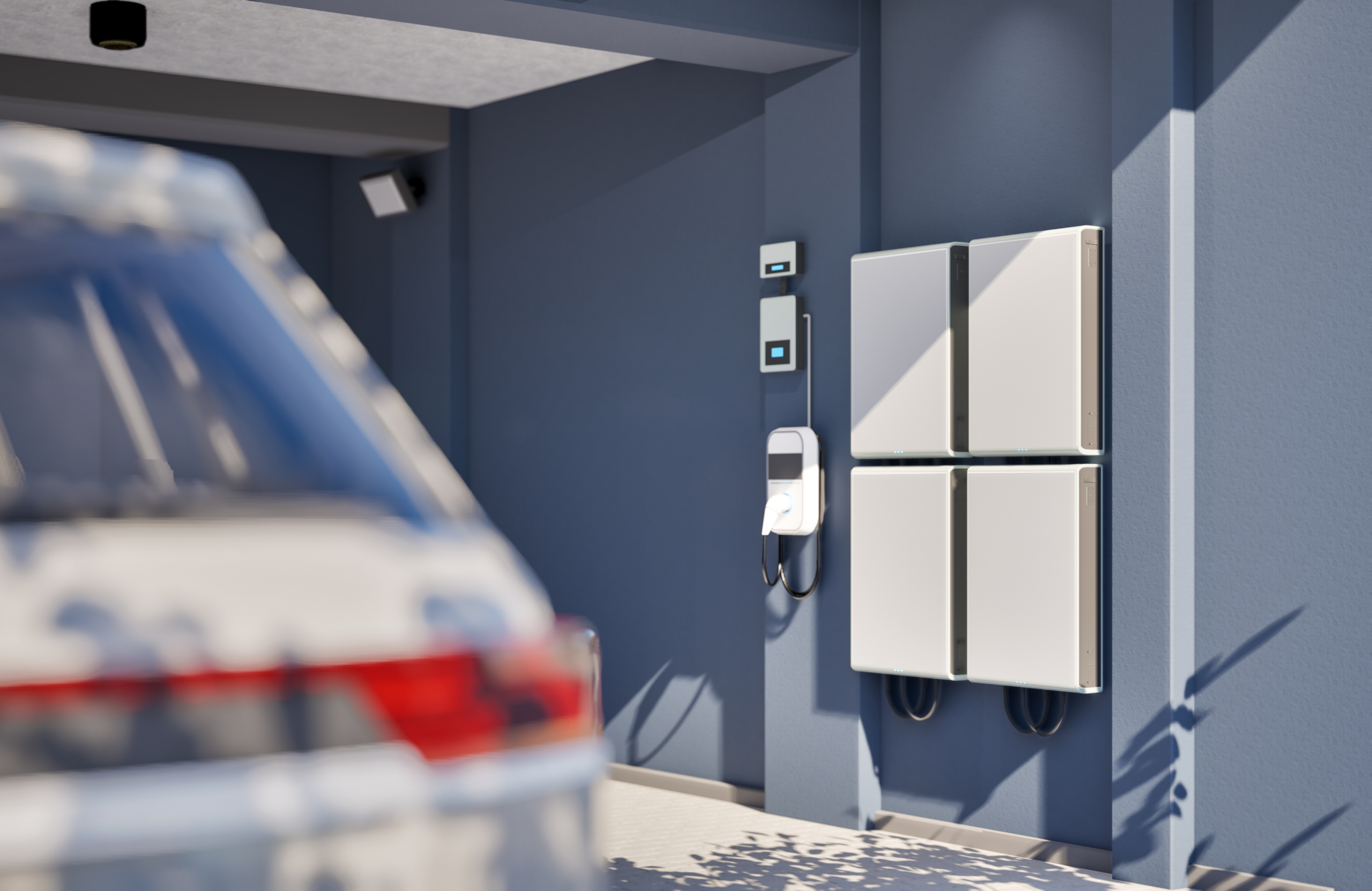
This is where energy storage moves from “nice to have” to financially logical. A home battery allows solar owners to shift self-generated electricity into the hours when it is actually needed. Instead of sending surplus power to the grid at midday, it can be stored and used later in the evening, reducing purchases from the grid when electricity is typically more valuable. For many households, the primary benefit is not backup power but improved self-consumption: the ability to turn a larger share of rooftop generation into direct household savings. And in areas facing netcongestie (grid congestion), lowering peak export can also be beneficial from a system perspective, helping reduce reverse power flow during the hours when the grid is most strained.
As storage becomes more common, the next question is not “battery or no battery,” but what kind of battery is best suited to daily cycling in a stationary home setting. Lithium-ion systems dominate today’s market and offer high energy density, which is crucial for weight- and space-constrained applications. However, stationary storage prioritizes different attributes: stable daily charge-discharge performance, predictable degradation, long service life, and a strong safety profile over years of continuous operation.
When export value declines, storing electricity for later use becomes economically rational.
A residential battery can:
- • Increase self-consumption from ~40% to 70–80%.
- • Shift midday production to evening demand.
- • Reduce exposure to low or negative feed-in prices.
- • Provide backup capability in selected configurations.
- • Support local grid stability in congested regions.
In provinces already affected by netcongestie, reducing injection into the grid may also become technically advantageous.
Not All Batteries Serve the Same Purpose
Stationary storage prioritizes different attributes: stable daily charge-discharge performance, predictable degradation, long service life, and a strong safety profile over years of continuous operation.
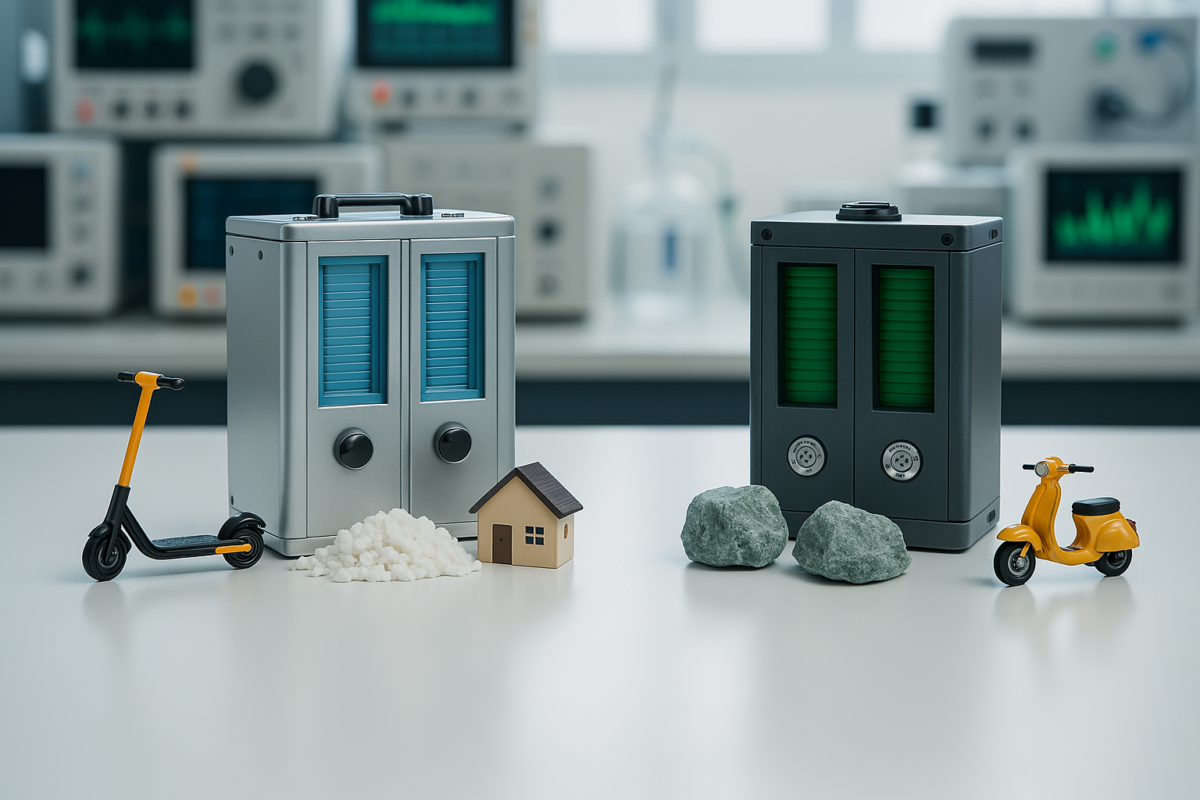
Sodium-ion technology enters this conversation as a compelling option for stationary storage. It is based on abundant raw materials and avoids dependence on lithium, cobalt, or nickel. For many households, the goal is not to squeeze the maximum possible energy into the smallest possible volume, but to store solar electricity safely and reliably every day. As the Dutch market shifts toward self-consumption, those practical characteristics become more relevant.
Lithium-ion systems
Widely deployed and high energy density, lithium-based systems dominate today’s residential market. However, they rely on globally concentrated supply chains and require advanced thermal management.
Sodium-ion systems
Sodium-ion technology offers a different optimisation profile:
- • Uses abundant raw materials.
- • Designed for stable daily cycling.
- • Strong thermal stability characteristics.
- • No lithium, cobalt or nickel.
- • Suitable for stationary storage applications where volumetric density is less critical.
For daily charge-discharge cycles typical in solar self-consumption models, cycle stability and safety become more important than maximum energy density.
The European Supply Chain Factor
There is also a broader European context. The energy transition is accelerating, and storage supply chains matter. Systems manufactured within Europe can offer clearer regulatory alignment, transparent certification pathways, and more predictable warranty and service frameworks. For Dutch homeowners and SMEs, the long-term value of storage depends on reliability, compliance, and support—especially as storage becomes a core part of household energy management rather than a niche add-on.
As Europe accelerates electrification, supply chain resilience becomes increasingly relevant.
Energy storage systems manufactured within the EU offer:
- • Regulatory alignment.
- • Certification under European standards.
- • Transparent warranty framework.
- • Reduced geopolitical dependency.
- • Shorter logistics chains.
Grid Congestion and System-Level Thinking
At the same time, the Netherlands is dealing with structural grid constraints. Residential storage is not a standalone solution to congestion, but it is part of a portfolio of flexibility measures that can reduce peak export and smooth demand patterns. As the energy system becomes more decentralised, the ability to store and use electricity locally is increasingly aligned with how the grid needs households to behave—whether because of pricing signals, technical limits, or both.
What Dutch Solar Owners Should Do in 2026
What should solar owners do now, before 2027 arrives? The most useful first step is to understand the current energy profile of the household: how much solar electricity is being self-consumed, how much is exported, and when that export occurs. The second step is to look at the household’s tariff structure and exposure to changing compensation schemes, particularly if dynamic tariffs are being considered. From there, it becomes possible to evaluate practical options—such as shifting loads to midday, adding smart controls, or introducing storage—based on the real daily pattern of production and consumption. It is also worth checking system readiness, such as inverter compatibility and installation requirements, because the best time to plan an upgrade is before market demand peaks.
The end of net metering marks a turning point, but it is not a setback. Solar panels will continue to produce electricity efficiently in the Netherlands. The difference after 2027 is how that electricity creates value. The households that benefit most will be those that adapt to the new logic early—by increasing self-consumption, reducing reliance on low-value export, and choosing technologies that support reliable daily optimisation.
Freen is developing this next phase of residential energy management with sodium-ion energy storage systems manufactured in Estonia, designed for daily cycling in hybrid solar applications and built around EU certification and a clear warranty framework. The objective is simple: help solar owners keep more of the value of the electricity they already produce, even as the market rules change.