Wind energy is no longer just for sprawling offshore farms and giant three-bladed towers on the horizon. Thanks to advances in small wind turbine technology, it is increasingly a practical option for homes, farms, and businesses. If you have ever typed “how do wind turbines work” into a search bar and ended up confused by engineering jargon, this guide is for you. We will walk through the key components: rotor, generator, inverter, and grid connection, and explain exactly what happens from the moment wind blows to the moment your lights turn on.
It All Starts with the Rotor
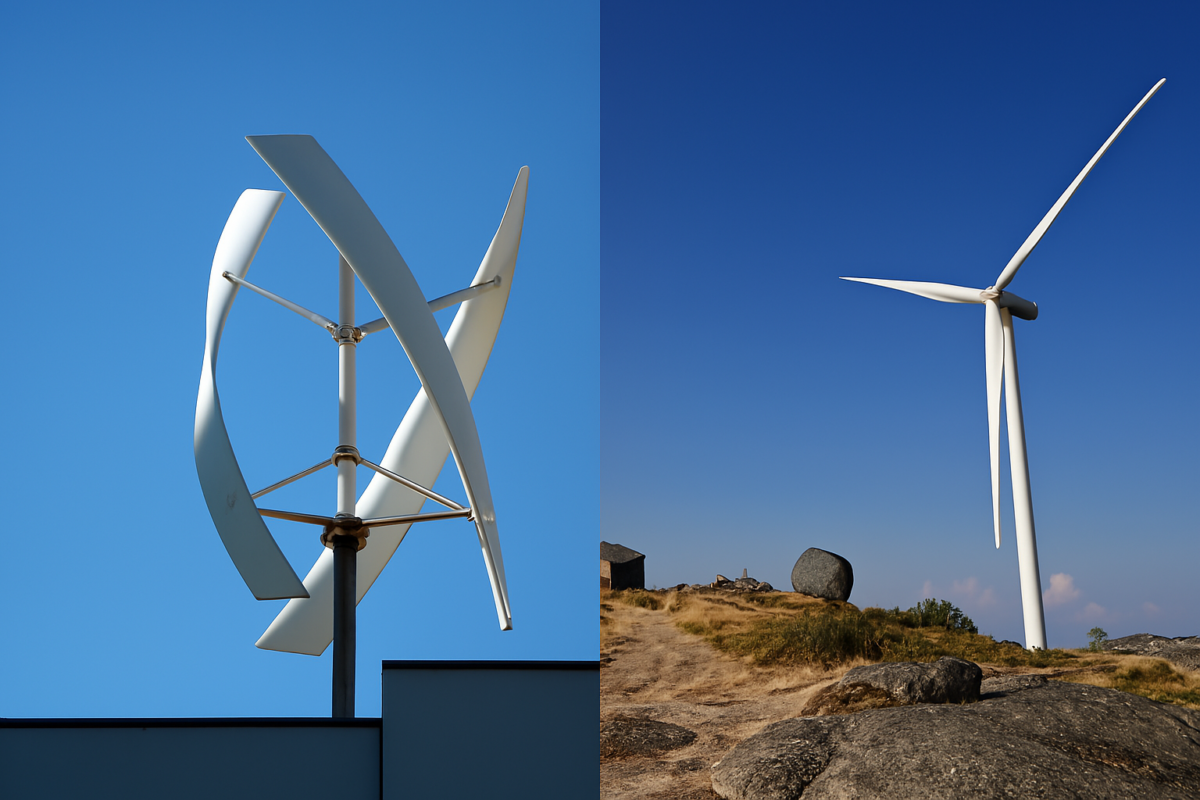
The rotor is the part of a wind turbine that actually catches the wind. In a conventional horizontal-axis turbine (the kind you see on large wind farms), the rotor blades spin like a propeller. Small wind turbines designed for residential or light commercial use, however, increasingly use a vertical-axis wind turbine (VAWT) design instead. Rather than blades that face into the wind, a VAWT has blades arranged around a central vertical shaft — think of it like a spinning carousel. This matters for several practical reasons. VAWTs do not need to rotate to face the wind, so they perform well in turbulent, shifting urban or semi-rural airflows. They also operate at lower heights, making installation simpler and planning applications more straightforward. Freen, a specialist in small wind energy, has focused exclusively on VAWT technology precisely because of these real-world advantages for distributed energy generation.
From Rotation to Electricity: The Generator
Once the rotor is spinning, that mechanical energy needs to be converted into electricity. This is the job of the generator, which sits at the base of the turbine shaft in most VAWT designs. Inside the generator, rotating magnets pass by copper coils, inducing an electrical current — the same fundamental principle Michael Faraday demonstrated in 1831. The output at this stage is alternating current (AC), but its voltage and frequency vary depending on how fast the wind is blowing. That raw output is useful, but it needs further conditioning before it can power your home or feed into the grid.
Making the Power Usable: The Inverter
The inverter is the unsung hero of any small wind system. Its job is to take the variable electrical output from the generator and convert it into clean, stable power — typically 230V AC at 50Hz in Europe, matching what your appliances expect and what the grid demands. Modern inverters are also smart devices: they monitor grid conditions, protect against faults, and can prioritise whether power goes to your home, a battery, or is exported. Without the inverter, the electricity produced by the turbine would be unusable in a domestic or commercial setting.
Connecting to the Grid — and Storing What You Don’t Use
Once power has passed through the inverter, it can flow in two directions: into your building’s electrical circuit, or back out through the grid connection point. A grid-tied small wind system can effectively run your meter backwards when you produce more than you consume, earning you export credits. However, the wind does not always blow when you need power most. This is where energy storage becomes a genuine game-changer.
Freen pairs its VAWT turbines with home energy storage solutions, including sodium-ion batteries — an emerging battery chemistry that offers several advantages over lithium-ion alternatives:
- • Safer chemistry: sodium-ion cells are inherently more thermally stable, reducing fire risk.
- • Abundant materials: sodium is far more widely available than lithium or cobalt, making the supply chain more resilient and the long-term cost outlook more favourable.
By combining a VAWT with a sodium-ion battery, a home or farm can store wind energy generated overnight or during low-demand periods, then draw on it during peak hours, dramatically increasing self-consumption and reducing reliance on grid imports.
Why VAWT Specifically? The Case for Small, Smart Wind
Large horizontal-axis turbines are engineering marvels, but they are built for wide open spaces and utility-scale operations. For anyone looking at a rooftop, a small plot of land, or an agricultural building, a small vertical-axis wind turbine is a more practical fit. VAWTs are quieter, have a lower visual profile, and require less maintenance because their drivetrain components are housed at ground or roof level rather than at height. They also pair naturally with solar panels, since wind and solar generation patterns tend to complement each other across seasons.
Where to Start Your Wind Energy Journey
Understanding how wind turbines work is the first step. The next is figuring out whether a small wind system makes sense for your specific situation — your location, your energy consumption, your roof or land, and the incentives or grants available in your area. Freen offers both VAWT turbines (the Freen-9 and Freen-20 models) and integrated energy storage, along with design and engineering support and grant assistance to help you navigate the whole process. It is a practical place to move from curiosity to a concrete energy plan.
Clean, local energy starts with one turbine.
Join the growing number of homes and farms generating their own power with Freen. We’d love to help you take that first step.
Write us at contact@freen.com and start today!