Interest in small wind turbines for homes has grown steadily alongside solar adoption — yet wind remains the less understood of the two technologies. For homeowners, eco-village developers, and housing cooperatives considering a renewable energy mix, the questions are consistent: will it actually generate meaningful power, how loud is it, and what will planning authorities say? Here is an honest look at what to expect.
Performance: What a Small Wind Turbine Will (and Won’t) Do
A small wind turbine for home use typically ranges from 1 kW to 10 kW in rated capacity. In practice, annual output depends heavily on your site’s average wind speed. Some manufacturers rate turbines at 11–12 m/s (a strong breeze), but average household sites across northern Europe sit closer to 5–7 m/s. At those speeds, a 2.5 kW turbine realistically generates 2,000–4,500 kWh per year — enough to cover 50–100% of a typical home’s electricity demand depending on location and consumption habits.
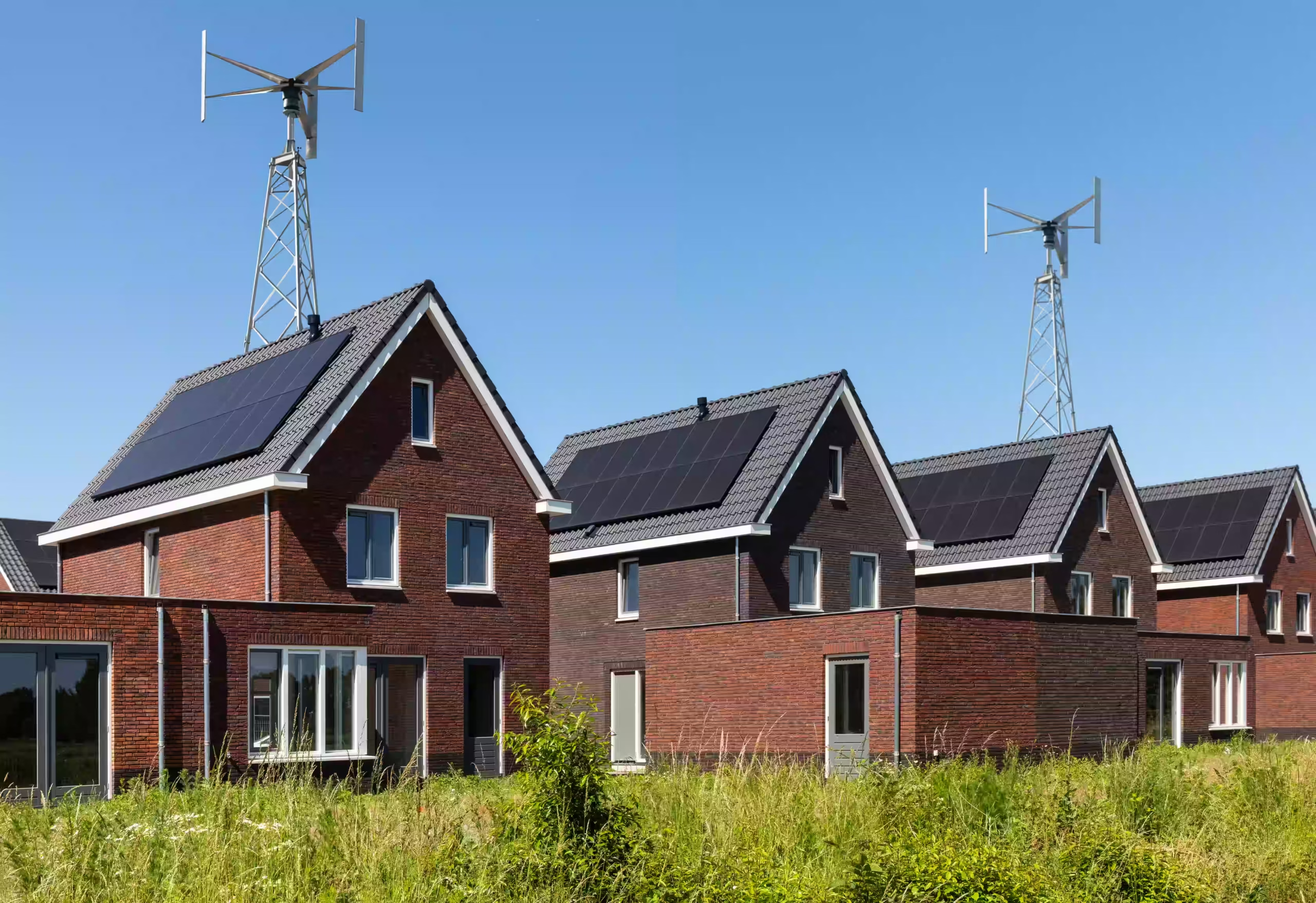
One design choice worth understanding is turbine orientation. Traditional horizontal-axis turbines must physically rotate to face the wind, adding mechanical complexity. Vertical-axis wind turbines (VAWTs), like those produced by Freen, require no wind orientation mechanism, which means they perform regardless of wind direction, an advantage on sites with turbulent or shifting winds, including many suburban and semi-rural locations.
The Freen-9, for example, is a 9 kW vertical-axis turbine with a 6-metre rotor diameter, designed for residential and farm use. It operates at a slow average of 90 RPM and cuts in at wind speeds as low as 3.5 m/s — making it viable on sites that would underperform with turbines requiring higher sustained winds. The design is gearless, using a direct-drive permanent magnet generator, which reduces mechanical losses and extends operational lifespan to a rated 20 years.
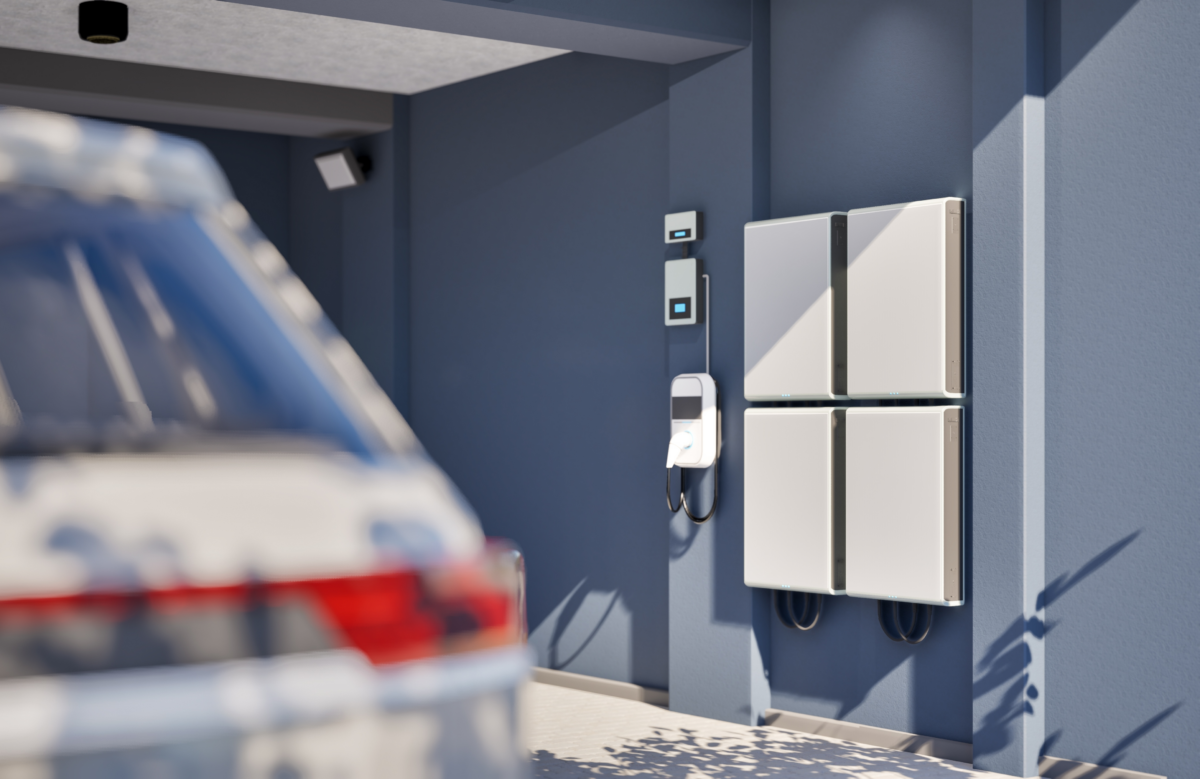
For homeowners considering battery integration, the Freen-9 is compatible with both on-grid and off-grid configurations, and pairs with sodium-ion or LiFePO₄ battery storage — options increasingly relevant as households look to store generation for use during evening hours or grid outages.
The key strategic insight remains unchanged: wind turbines and solar panels are natural complements. Solar peaks in summer and midday; wind tends to be stronger in autumn and winter, and produces at night. Freen explicitly positions their turbines as compatible with most modern PV systems, and a household combining both technologies can achieve significantly higher self-sufficiency than either system alone — a fact increasingly central to the design briefs of eco-housing developers and off-grid communities.
Noise: The Real Picture
Noise is the anxiety most homeowners raise first. Modern small wind turbines are quieter than their reputation suggests. A well-sited turbine at 35–40 metres distance typically produces 35–45 dB(A) — comparable to a quiet conversation or a refrigerator hum. The character of the sound matters too: the low, rhythmic whoosh of blade rotation is generally less intrusive than intermittent mechanical noise.
Two factors drive noise above acceptable levels: poor turbine quality and wrong sitting. Mounting a turbine directly onto a house roof is rarely advisable — structural vibration transmits into the building fabric and amplifies the effect considerably. A dedicated mast, properly distanced, performs and sounds better.
Neighbours are planning consideration as much as a technical one. Most European regulatory frameworks require noise assessments at nearby dwellings, typically applying a 35–40 dB(A) limit at the façade of the nearest sensitive receptor.
Planning: A Country-by-Country Reality Check
Planning rules vary considerably across Europe, and height is the variable that determines almost everything.
In the UK, planning rules differ between England, Wales, Scotland and Northern Ireland. In Wales, for example, permitted development rules for a stand-alone domestic wind turbine set an 11.1-metre limit to the highest part of the turbine, subject to strict conditions.
Protected landscapes, listed buildings, conservation areas, setbacks, and noise rules can change the outcome.
In Ireland, agricultural wind turbines can qualify as exempted development up to 20 metres total height, provided they meet conditions on rotor diameter, setbacks, noise, aviation safety and the number of turbines per site. Domestic turbines have a lower exemption threshold, typically 13 metres total height.
In France, wind turbines under 12 metres may generally be installed without prior planning authorisation if local planning rules allow them. Turbines from 12 to 50 metres require a building permit.
In the Netherlands, small wind projects are governed mainly through municipal environment and planning permits and local environment-plan rules. Local zoning and provincial constraints are decisive, so feasibility varies strongly by municipality.
In Germany, turbines above 50 metres generally require permitting under the Federal Immission Control Act. Turbines of 50 metres or less are usually handled under state-level building law, with requirements varying by Land. Bavaria remains more restrictive than many northern states, where wind conditions and rural land availability are generally more favourable.
A Note for Developers and Energy Cooperatives
For eco-village developers and energy cooperative planners, small wind turbines offer something solar alone cannot: generation in darkness and winter months. Sites with average wind speeds above 5 m/s at 10 metres elevation — identifiable through national wind atlases — can justify turbine investment as part of a community energy strategy.
Several established models exist: cooperatives in the Netherlands and Germany have successfully co-developed small turbine clusters on shared agricultural land, distributing output across member households. The administrative complexity is real, but it is manageable with the right planning and grid connection advice from the outset.
Small wind turbines will not suit every house or every site. But for homes with adequate wind resource, appropriate setbacks, and a developer or owner willing to navigate the local planning framework, they represent a valuable complement to solar — and a meaningful step toward genuine energy independence.
Contact us today to find out if your site is suitable for a wind energy project. Drop us a note at contact@freen.com