Why Energy Storage Matters More Than Ever? As more homes and businesses invest in renewable energy, one challenge becomes clear: energy is not always available when you need it.
Solar panels generate electricity during the day. Wind turbines depend on weather conditions. But your energy demand is constant, especially during evenings, nights, and power outages.
This is where energy storage becomes essential. And increasingly, a new technology is gaining attention: sodium-ion batteries.
What Is a Sodium-Ion Battery?
A sodium-ion battery is an energy storage system that uses sodium instead of lithium to store and release electricity. It works in a similar way to lithium-ion batteries but relies on more abundant and stable materials. Sodium-ion batteries are specifically developed for stationary energy storage, where factors such as safety, cycle life, and thermal stability are more important than energy density.
How Sodium-Ion Batteries Work in a Home Energy System
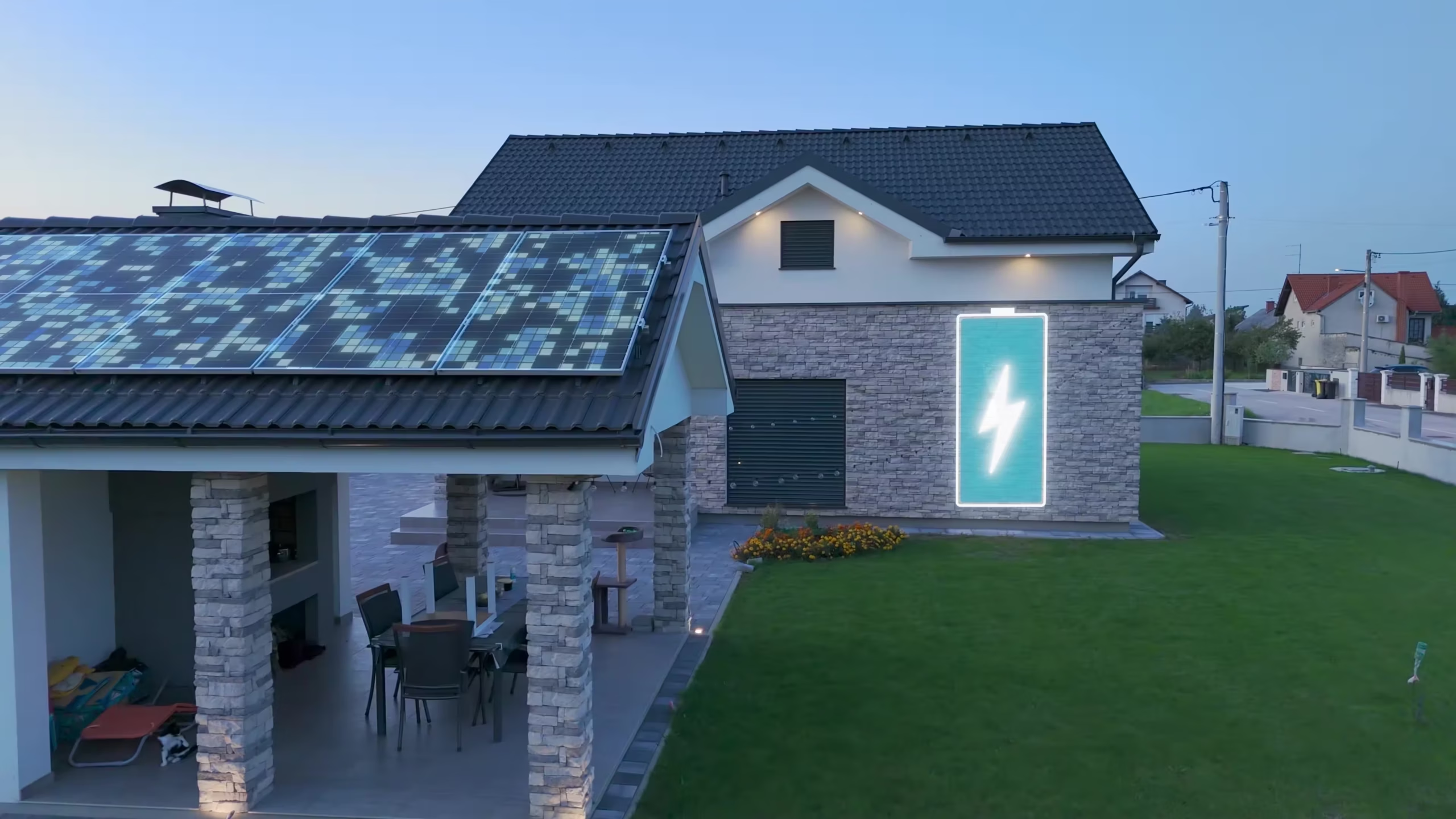
In a typical setup, a sodium-ion battery stores excess energy generated by solar panels or a wind turbine like Freen-9 or Freen-20.
Here’s how it works:
- • During production (wind or solar), excess energy is stored
- • When demand increases, stored energy is released
- • During a power outage, the battery supplies electricity to essential systems
This allows your home or business to operate even when the grid is unavailable.
Why Not Just Use Lithium Batteries?
Lithium-ion batteries are widely used, but they were originally developed for electronics and mobility—not necessarily for long-term stationary energy storage. Sodium-ion batteries offer a different set of advantages, especially in the context of home and farm energy systems.
Key differences include material availability (sodium is more abundant than lithium), thermal stability (lower risk of overheating), and safety profile of sodium-ion batteries—they are designed for stable, long-term operation. Rather than replacing lithium entirely, sodium-ion batteries provide an alternative that is often better suited for fixed energy infrastructure.
What Makes Sodium-Ion Batteries Suitable for Backup Power?
The main role of a battery in a hybrid system is not just storage—it is continuity. When the grid goes down, or when neither the wind nor the sun is delivering enough power, the battery is what keeps the lights on. Sodium-ion batteries are particularly well suited to this backup role because of how they behave under real-world conditions. Sodium-ion batteries are well suited to long-duration storage, meaning they can hold energy for extended periods rather than just bridging short gaps—making them genuinely useful when several overcast, low-wind days occur in succession. For critical systems where reliability is non-negotiable, this combination of thermal stability, cycle durability, and storage depth makes sodium-ion a compelling choice. As the technology matures and production scales up, sodium-ion is increasingly seen as one of the most promising battery chemistries for residential and community energy resilience—offering solid performance without reliance on scarce materials like cobalt or lithium, which are subject to their own supply chain pressures.
Can Sodium-Ion Batteries Power a Home During an Outage?
When the grid fails, the battery responds immediately, supplying electricity to the home without any perceptible interruption. There is no waiting for a generator to start, no manual switching—the transition is seamless. What makes this particularly effective in a hybrid setup is that the battery does not have to carry the load alone. Wind and solar generation continue feeding the system during the outage, recharging the battery as it discharges and effectively extending the period over which the home can operate independently. In practical terms, this means essential loads—heating, refrigeration, water systems—remain operational not just for hours, but potentially for days, depending on conditions and system size. The result is a meaningful shift in what energy resilience actually looks like for a homeowner: a system capable of sustaining normal household function through extended grid disruptions.
Sodium-Ion + Wind + Solar: A Complete Hybrid System
The real strength of sodium-ion batteries becomes clear when they are part of a hybrid system.
In such a setup:
- • Solar panels provide daytime energy
- • Wind turbines (e.g., Freen-9 or Freen-20) generate power day and night
- • Sodium-ion batteries store and stabilize the system
This combination creates a more balanced and resilient energy solution.
Benefits of this approach:
- • Continuous energy availability across different conditions
- • Reduced dependency on the grid
- • Improved system efficiency
- • Greater protection against outages
Are Sodium-Ion Batteries Safe for Home Use?
Sodium-ion batteries are widely considered one of the safer options for home energy storage, and this is not incidental—it is built into the chemistry itself. Unlike some lithium-based systems, sodium-ion cells have a significantly lower risk of thermal runaway, the dangerous chain reaction that can cause batteries to overheat or, in extreme cases, catch fire. For homeowners, this translates into more predictable, consistent performance over the life of the system, without the safety concerns that have historically made some people cautious about installing battery storage close to their living spaces. Safety is one of the key reasons why sodium-ion technology is gaining attention in stationary applications.
When Does It Make Sense to Choose Sodium-Ion?
Sodium-ion batteries make the most sense in situations where reliability, safety, and long-term performance matter more than compact size.
They are particularly well suited for systems designed to provide backup power or operate as part of a hybrid setup with wind and solar. In these cases, the priority is not maximum energy density, but stable operation, predictable performance, and the ability to handle regular charge and discharge cycles.
Sodium-ion batteries are particularly relevant in scenarios where:
- • Long-term reliability is more important than compact size
- • The system is used for backup or hybrid energy
- • Safety and stability are priorities
- • The installation is stationary (not mobile)
Because these batteries are designed for stationary use, they fit naturally into environments where the system stays in one place and supports everyday energy needs. This includes residential installations, farms, and small commercial sites—especially in areas where power outages are more frequent or grid reliability is limited.
They are also a strong option for off-grid or semi-off-grid setups, where energy independence and system stability are essential.
In short, sodium-ion batteries are best used where energy storage is not just about efficiency—but about dependability and long-term resilience.
From Energy Storage to Energy Security
Traditionally, batteries were seen as a convenient way to store whatever surplus solar energy the panels happened to produce on a sunny afternoon. That framing is now outdated. Batteries have become a core component of how homeowners, businesses, and communities think about energy security—not a nice-to-have addition to a renewable setup, but a foundational layer of resilience in their own right. In practical terms this means keeping operations running when the grid goes down, reducing dependence on external power that is subject to price volatility and supply disruption, and smoothing out the natural variability of wind and solar generation so that renewable energy behaves more like a reliable, dispatchable resource. Sodium-ion batteries fit naturally into this broader shift. Their stability, safety profile, and suitability for long-duration cycling make them well aligned with the demands of serious energy resilience, anchoring a system that is designed to keep functioning regardless of what the grid is doing.
Conclusion: Storage That Supports Real-World Needs
Energy systems are evolving. It is no longer enough to generate electricity—you need to control when and how it is used. Sodium-ion batteries provide a practical solution for storing energy safely and reliably, especially when combined with renewable generation like wind and solar. Together with technologies like Freen-9, they form a system designed not just for efficiency—but for continuity, independence, and resilience.
Want to Explore Battery Storage for Your System?
Not every energy setup requires the same type of storage.
If you’re considering sodium-ion batteries as part of a wind or hybrid system, we can help you choose the right configuration.
Contact us to explore your options.