

Generate
Energy. Keep Independence
European energy solutions built for the conditions of France, Belgium, and Switzerland.
Tired of high energy bills and grid congestion? Generate your own power, store it safely, and rely less on outdated infrastructure. Freen makes it possible with compact wind turbines for real properties and safe, European-made sodium-ion batteries.
The Grid is Under Real Pressure
Electricity tariffs keep growing, and a solar panel that works great in July produces a fraction of that in January. Here’s how small wind turbines and energy storages address these issues:
-
Grid
CongestionIn Belgium, Elia and Fluvius have officially declared a grid congestion crisis. In France, businesses needing higher capacity face 6 to 9 months of waiting with Enedis. Generating and storing your own electricity means you stop depending on a queue you can't control.
-
A Bill That
GrowsSwitzerland now ranks second in Europe for industrial electricity prices, and new government levies appear on bills every year. In France, the regulated nuclear wholesale price is set to nearly double by 2026. Own energy system produces electricity at zero cost per kWh after payback period.
-
Solar Covers
SummerNormandy, Brittany, Wallonia, and the Swiss plateau all have long stretches of low-sun days. Wind is strongest in exactly those months. Pairing a Freen turbine with solar panels and sodium-ion storage means your property produces clean energy year-round.
-
Lithium Batteries
Are a ConcernHigh-profile fires, and insurer pushback have made lithium storage harder to justify. Sodium-ion chemistry is safer for installation, simpler for compliance, and free from the geopolitical risks of lithium sourcing.
Wind + Storage: Consistent Energy,Through Every Season
In France, Belgium, and Switzerland, wind blows hardest in the months when solar panels produce the least, making small-scale wind generation not just a complement to solar, but the missing half of a complete energy strategy.
A Freen turbine generates power around the clock, across every season.
Our sodium-ion batteries store what you generate and release it when you need it: overnight, during peak tariff hours, or when the grid is under stress.
-
The Grid
BypassFor businesses facing connection delays in France or the congestion crisis in Belgium, own generation directly reduces your net demand from the grid. A Freen turbine cuts what you need to draw, making you less dependent on infrastructure you can't control.
-
Current
IncentivesIn France, the Enedis autoconsommation premium and MaPrimeRénov' favour early movers. Regional grants in Belgium and the KEV/RPC federal scheme in Switzerland support renewable self-generation.
-
European
ProductionFreen sodium-ion battery contains no lithium, no cobalt, and carries no risk of thermal runaway. Designed and manufactured in Europe, it meets the highest safety standards for residential and commercial installation.
Not sure of own power generation is a solution for your energy challenges?
Get a PDF guide and learn more about our solutions.
*By submitting your email, you agree to receive the PDF guide and marketing communications from us.
Renewable Solutions for Energy Independence
Use wind power and batteries to reduce your dependence on the grid. Small wind turbines and sodium-ion storage work great in hybrid systems, and as a stand-alone renewable energy source for your independence.
-
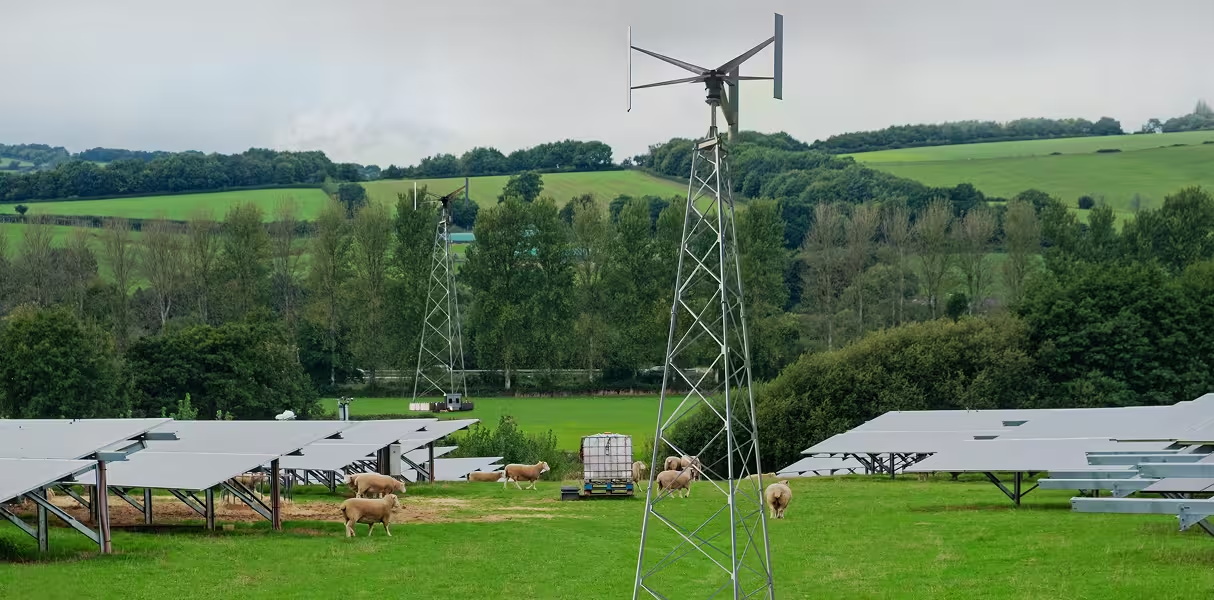
Wind Turbines
Small wind turbines that harness renewable power for consistent energy generation.
-
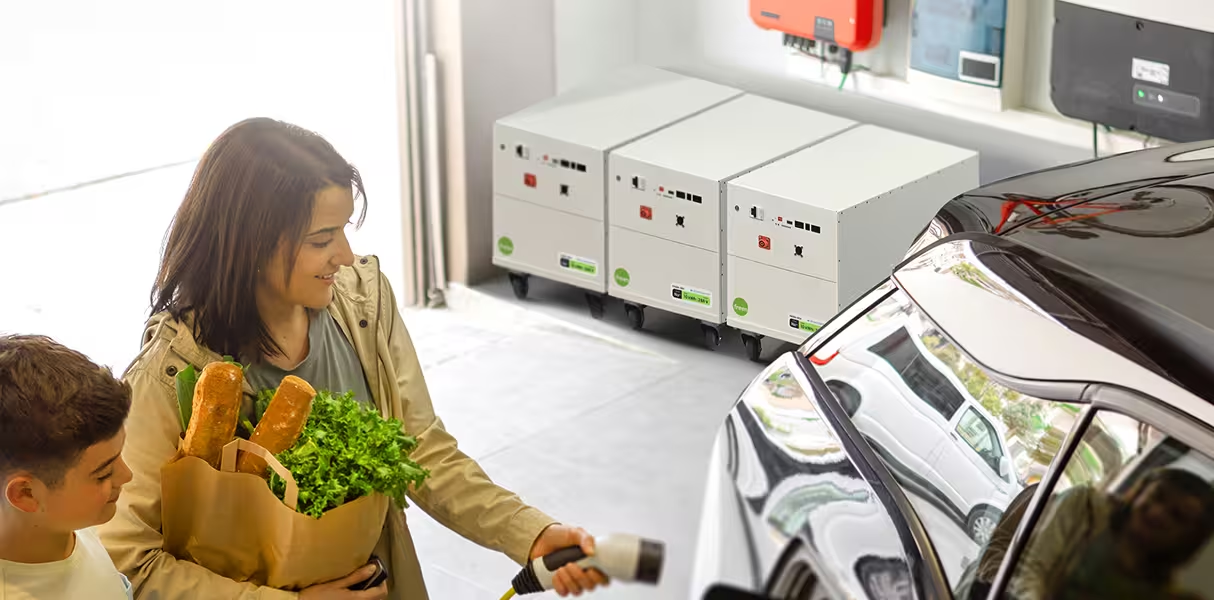
Energy Storage
Store surplus power to ensure uninterrupted energy supply, even during outages.
Energy Solutions Built for France, Belgium, and Switzerland
In Belgium, Elia and Fluvius have declared an official grid congestion crisis. Businesses in Flanders and Wallonia can no longer get industrial connections on demand. In France, the grid needs 40,000 km of lines upgraded by 2040, Enedis connection delays stretch to 6 to 9 months, and the regulated nuclear price advantage that kept French bills low is being phased out. In Switzerland, electricity prices are the second highest in Europe for industrial users. Across all three markets, solar alone cannot cover the winter months, when wind generation peaks.
At Freen, we understand these local realities. That is why our energy solutions are built specifically for French-speaking Europe: compact 9 kW and 20 kW wind turbines paired with sodium-ion battery storage that is safe, stable, and lithium-free, manufactured in Europe. Whether you are a business owner bypassing grid congestion in Wallonia, a farmer cutting operational costs in Normandy, or a household in Switzerland looking to insulate yourself from unpredictable tariffs, wind and storage together offer a complete and immediate answer.

Find out which energy system is best for your site.
Get consultationChoose Your Path
-
Solve your grid congestion issues and secure a predictable energy solution for businesses
-
Transform your current energy generation system into full powered backup.
-

Join our network. We provide the hardware; you provide the local expertise
FAQ
-
A 9 kW turbine in a good wind location such as coastal Brittany, Normandy, or the Belgian plains produces roughly 6,000 to 18,000 kWh per year, depending on average wind speed at the site. A 20 kW turbine in comparable conditions can produce 18,000 to 43,000 kWh annually. For reference, the average French household consumes around 4,500 kWh per year, while a small farm or SME typically uses 30,000 to 80,000 kWh. We provide a free generation estimate based on your specific location before any commitment.
-
The total installed cost of a small domestic wind turbine in France depends on turbine size, mast height, ground conditions, and grid connection works. A 9 kW VAWT turbine typically starts from €12,000 plus the tower and installation cost. Available subsidies, including the Enedis autoconsommation premium and regional schemes, can reduce the net cost significantly. We provide a full cost and payback projection as part of our free quote, specific to your location and consumption profile.
-
Yes, and this is one of the strongest use cases for small wind. Solar and wind are naturally complementary: solar peaks in summer daylight hours, while wind is strongest in autumn and winter, and generates power at night. Installing both with a shared battery storage system means your property produces clean energy across all seasons and times of day, dramatically reducing what you need to draw from the grid.
-
Yes. Agricultural sites are among the best candidates for small wind turbines: typically located in open, well-exposed land, with high and continuous electricity consumption (heating, cooling, irrigation, machinery), and away from urban planning restrictions that can complicate residential installations. A 20 kW turbine on a farm in Hauts-de-France, Normandy, or Wallonia can offset a substantial share of annual electricity costs. Belgian farms benefit additionally from regional energy grants that can significantly shorten the payback period.
-
In France, planning requirements depend on the turbine's mast height. Turbines under 12 metres typically require only a déclaration préalable de travaux, a simplified declaration, not a full building permit. Above that threshold, a permis de construire is generally required. Local rules can vary, particularly in protected landscape zones.
Ready to take the first step?

Thank you for
contacting us!
Your message has been successfully sent. Our team will review it and get back to you as soon as possible. We appreciate your interest in our products and services.

We use cookies
Our website uses cookies to collect statistical visitor data and track interaction with direct marketing communication. If you agree, press ‘I agree‘. We will not place cookies on your device if you do not agree. However, certain functions of the website may not function properly or may not function at all. You may withdraw your consent at any time. Please see our Privacy Policy for more information about cookies, data they collect, who may access them, and your rights.