

Sodium-Ion Batteries (SIB) for Every Application
A complete energy storage product line built on sodium-ion battery (SIB) technology. From a home module to a grid container. No lithium, no cobalt, no nickel. Engineered and assembled in Europe at the Freen OÜ manufacturing facility in Estonia.
Why Sodium-Ion Is the Right Chemistry for Stationary Storage
Choosing a sodium-ion battery over lithium-ion for stationary energy storage is not a cost compromise.
It is an engineering decision grounded in safety, longevity, and supply-chain independence. Sodium-ion battery technology is thermally more stable than lithium, which means the cooling system can be simplified or removed entirely. For the system owner, that translates directly into lower maintenance costs and one fewer failure point.
-
Sodium-ion is among the most promising sustainable battery alternatives, delivering the performance modern projects demand – without supply-chain risks of legacy chemistries.
-
Cycle Life - 10,000 to 14,000 Full Cycles
At one cycle per day, entry-level sodium-ion battery modules run for over 27 years in stationary storage applications. The NFPP battery line exceeds 38 years. Laboratory-confirmed at 60% end-of-life capacity, backed by a 10-year warranty on every product.
-
Cold Performance - Full Performance Down to -40 °C
Sodium-ion delivers rated capacity at temperatures where lithium shuts down. Northern Europe, mountain installations, outdoor telecom cabinets, and unheated garages all work without additional heating systems. No self-heating, no wasted energy in winter.
-
No Critical Minerals - Zero Lithium, Cobalt, or Nickel
Sodium-ion chemistry uses abundant sodium, iron, and phosphorus. No lithium, no cobalt, no nickel. This eliminates supply-chain risks of legacy chemistries and ensures stable pricing for residential and commercial projects across Europe.
-
Safety - No Thermal Runaway, No Fire Risk
Sodium-ion cells do not catch fire after puncture, overcharge, or short circuit. This eliminates special ventilation and fire suppression in residential installations. For commercial deployments, it simplifies permitting and insurance. Fewer regulatory hurdles, lower premiums.
-
Made in Estonia - 25,000 m² Factory, ISO-Certified
Assembly, testing, and documentation happen in-house in Ida-Viru county, Estonia. Production is certified to ISO 9001:2015, EN 1090-1, and ISO 3834-2. Low-voltage modules ship within 1-2 days from European stock.
Two Cathode Chemistries, Two Different Strengths
Not all sodium-ion battery technology is the same. Freen uses two cathode types across its lineup, each optimised for a different set of priorities.
NFPP (Sodium Iron Phosphate-Pyrophosphate)
NFPP battery
Maximum safety and longevity. The NFPP battery crystal lattice changes less than 4% over thousands of cycles, which virtually eliminates particle degradation. No oxygen release at high charge voltages.
-
Key trait
Zero fire risk, 14,000 cycles on BSL-N, zero critical minerals (only iron and sodium).
-
Trade-off
Lower energy density.
-
Best for
Reliability, durability, and tender compliance are the priority.

Layered Oxide (NaₓMO₂)
Layered Oxide
Delivers higher energy density than NFPP chemistry in a more compact form factor. This layered oxide battery is engineered for installations where space is constrained and performance per cubic meter is critical.
-
Key trait
Maximum energy in minimum volume and weight, top gravimetric and volumetric output.
-
Trade-off
Slightly lower cycle life and thermal margin.
-
Best for
Containerised and footprint-limited deployments.
Compatibility with Your Renewable Energy System
Are you looking for reliable energy storage and an additional level of control to enhance your solar system? Check if your inverter is compatible to enable a seamless upgrade with Freen sodium battery solutions.
-
Works with standard inverters
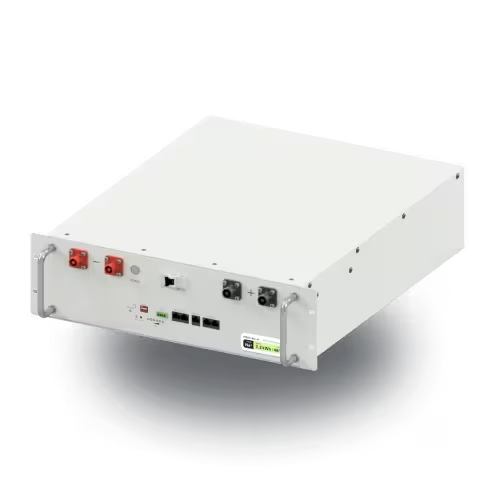
Sodium-ion cells have a wider voltage window than lithium. Freen solved the integration challenge through optimised battery architecture and smart BMS communication. The result: FREEN-BSL and FREEN-BSL-N work with most standard hybrid and off-grid inverters on the market without special firmware.
-
Cabinet and container options
The high-voltage cabinets (Cabinet 115, Cabinet 200) include an integrated inverter and connect directly to the AC grid. The DC 2280 container is delivered as a DC-side unit: you bring your own PCS. Both options support modular scaling and turnkey deployment for utility-scale projects.


Need help choosing the right battery for your system? Our team will guide you to the perfect match.
Get a consultationThe Full Sodium-Ion Lineup
From a sodium-ion home battery for residential use to a 20-foot container for sodium-ion commercial storage and utility projects, every product below runs on sodium-ion chemistry. No lithium, no cobalt, no nickel.
| Product | Energy | System Max | Voltage | Cycles | IP | Segment |
|---|---|---|---|---|---|---|
| Freen-BSL | 7.6 kWh | 121.6 kWh | 48 V | > 10,000 | IP20 | Residential |
| Freen-BSL-N | 7.5 kWh | Unlimited | 50 V | > 14,000 | IP20 | Residential |
| Freen-BSH | 10 kWh | 40 kWh | 288 V | > 10,000 | IP20 | C&I |
| Freen-BSL-R | 3.2 kWh | 51.2 kWh | 48 V | > 10,000 | IP20 | C&I |
| Freen-BSA-L | 115.2 kWh | 576 kWh | 720 V | ≥ 10,000 | IP54 | C&I |
| Freen-BSA-XL | 199.68 kWh | 998 kWh | 1,248 V | ≥ 10,000 | IP54 | C&I |
| Freen-BSL-T | 4.8 kWh | 153.6 kWh | 48 V | > 10,000 | IP45 | Telecom |
| Freen-BSC | 2.28 MWh | - | 1,189.7 V | ≥ 8,000 | IP54 | Utility |
Energy Storage That Respects the Planet
Our sodium-ion batteries embody the next generation of clean energy storage. Here's why they're better for you - and the environment:
-
Sodium-Ion Battery Materials
Unlike lithium-ion chemistry, sodium-ion batteries use readily available sodium and eliminate the need for rare earth metals, significantly reducing the ecological footprint of production. A truly sustainable battery alternative for the European market.
-
Recycling Redefined
Every component is designed with recyclability in mind, contributing to a circular economy that minimises waste. Our closed-loop process recovers active materials for second-life applications, setting a new standard for responsible end-of-life battery disposal.
-
Perfect for Renewables
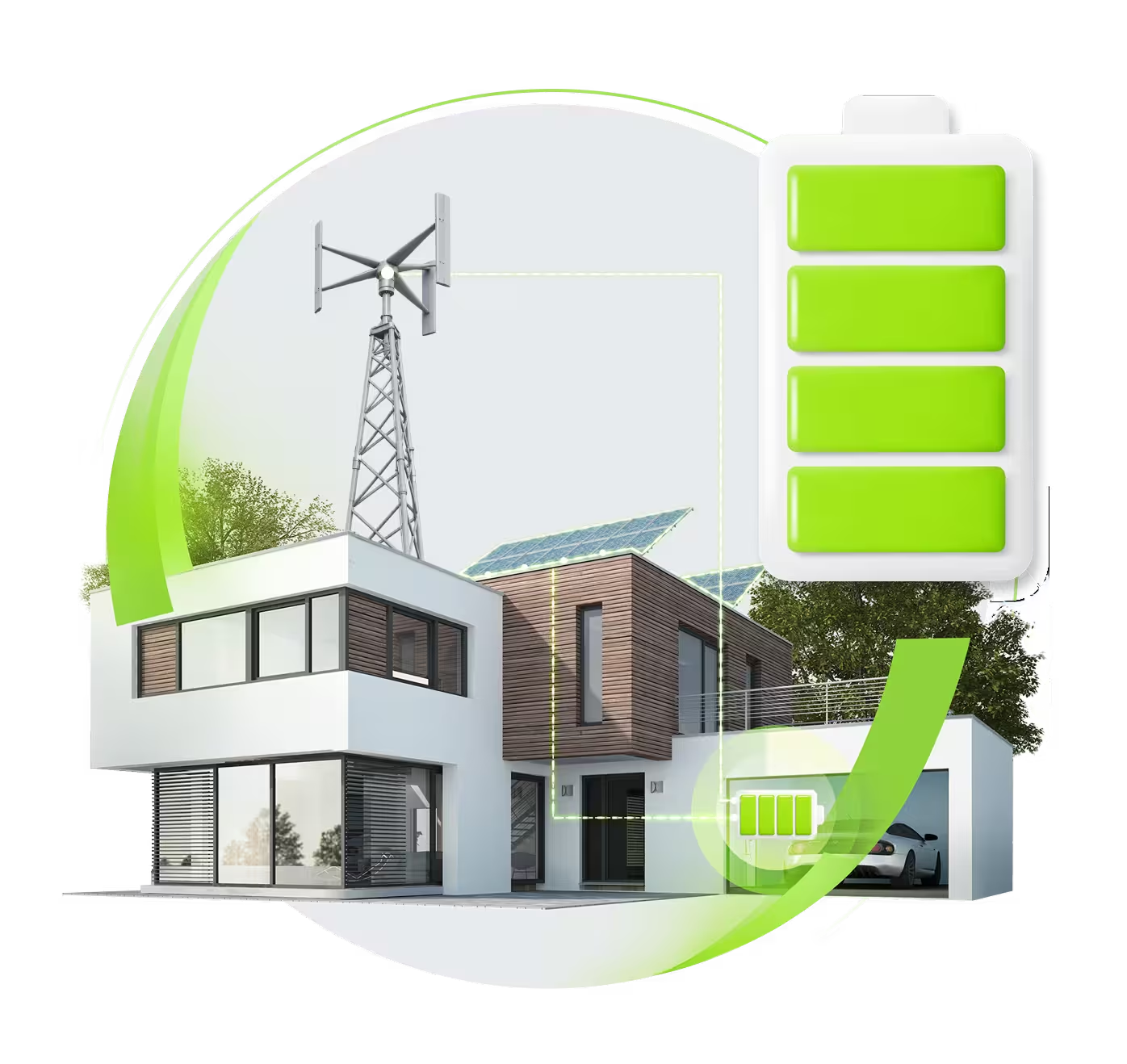
Engineered for seamless pairing with renewable energy sources like wind and solar, sodium-ion battery storage solutions ensure stable, long-term performance for fluctuating energy inputs and enable true energy independence for residential and commercial users.
-
Home Battery Lifespan
A longer home battery lifespan ensures consistent energy storage for years while supporting environmental responsibility by reducing waste and the impact of frequent replacements, delivering dependable backup power and accelerating the path to energy autonomy.
Still Have Questions?
-
Sodium-ion batteries offer superior safety (no thermal runaway), longer lifespan (10,000-14,000 cycles), and better cold-weather performance compared to lithium-ion. The materials (sodium, iron, phosphate) are abundant and non-toxic, making them highly sustainable and easily recyclable.
-
Freen low-voltage modules (BSL, BSL-N, BSL-R) work with most hybrid and off-grid inverters via CAN or RS485. Download our compatibility list or contact us for a custom check.
-
Sodium-ion matches lithium on round-trip efficiency (>97%) and significantly outperforms it on cycle life, cold-weather operation, and fire safety. Energy density per kg is lower, but for stationary storage this trade-off is favourable.
-
Sodium-ion battery technology has been in commercial production since 2023. Freen products are deployed across Europe in residential, agricultural, telecom, and industrial applications.
-
At one cycle per day, the entry-level product lasts over 27 years. The NFPP line exceeds 38 years. All modular products carry a 10-year warranty.
-
Yes. Freen low-voltage modules connect to standard hybrid inverters via CAN or RS485. No proprietary hardware is required. The combination with solar and wind creates a fully off-grid capable system.
-
Sodium is the sixth most abundant element on Earth. The chemistry contains no lithium, cobalt, or nickel, eliminating critical mineral supply risks and reducing the ecological footprint of production.
-
The built-in BMS monitors voltage, current, and temperature continuously. Combined with the inherently stable sodium-ion chemistry (no thermal runaway), it ensures safe operation without the need for active cooling or fire suppression systems.
-
For floor-mounted residential modules (BSL, BSL-N, BSH), we recommend 10 cm clearance on all sides for natural convection cooling. Specific installation guidelines are provided in the product datasheet.
-
The BMS will automatically reduce charge/discharge rates or disconnect the battery if temperatures exceed safe limits. However, sodium-ion chemistry is inherently more thermally stable than lithium-ion, making overheating extremely unlikely under normal operating conditions.
-
Freen sodium-ion modules deliver full discharge capacity down to -30 °C (BSL, BSL-N) and -40 °C (BSH) without external heating. Unlike lithium, which loses 20-40% capacity in the cold or wastes stored energy on self-heating, our low-temperature sodium battery maintains rated performance year-round.
-
Layered oxide offers higher energy density (more kWh per kg). NFPP offers longer cycle life (14,000 vs 10,000), absolute fire safety, and zero critical minerals. Both are sodium-ion and lithium-free. See the comparison above for details
Power Your Future with Sodium-Ion
Switch to sustainable, efficient energy storage today. Get in touch to explore how sodium battery solutions alone or combined with wind turbine for home can transform your energy system.

