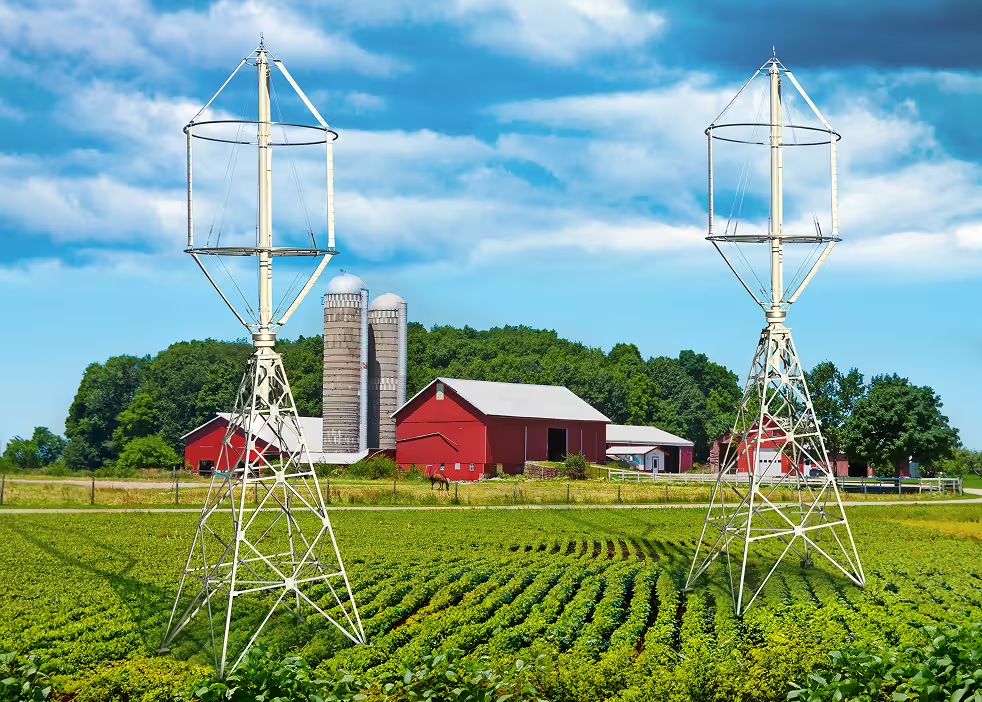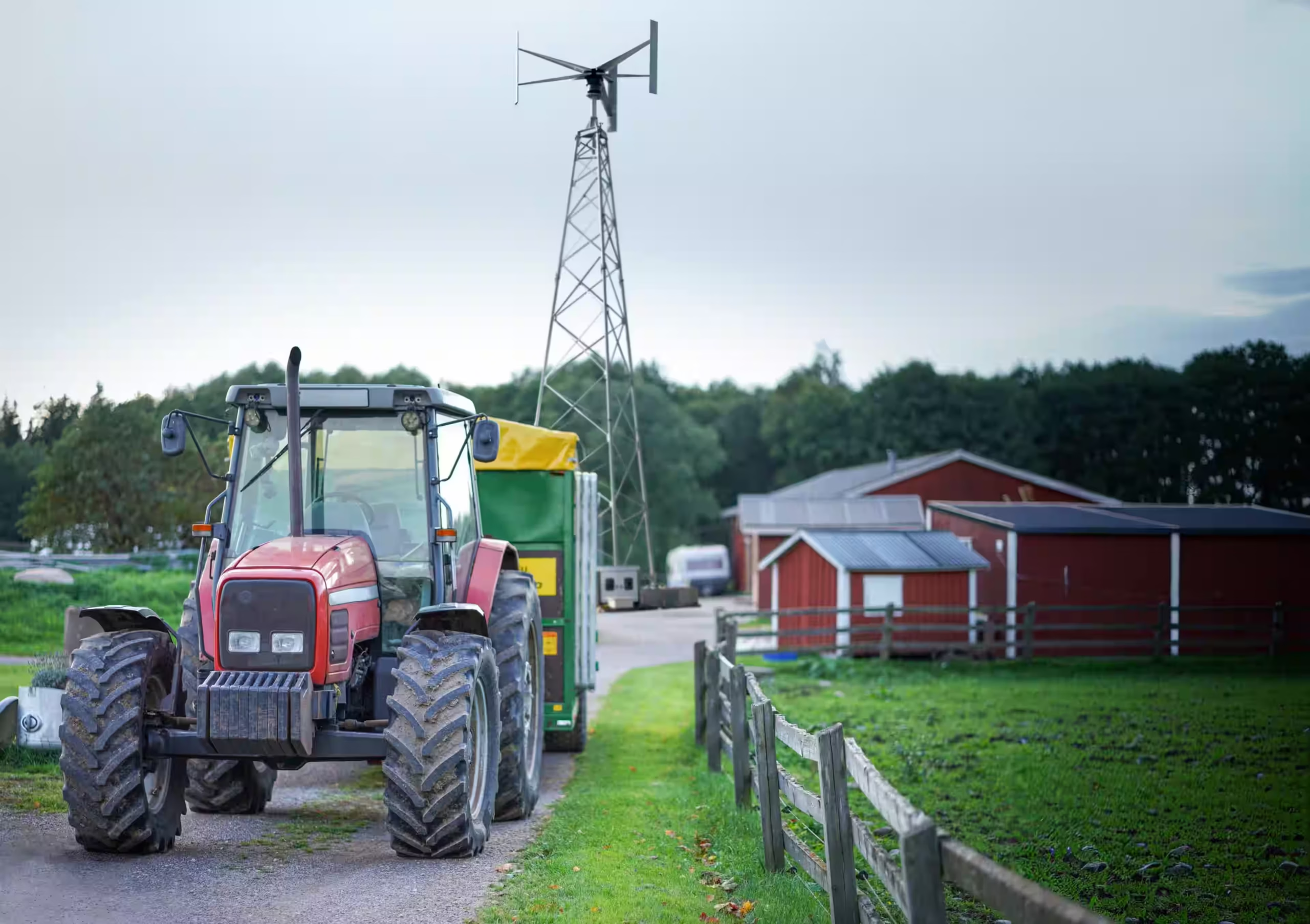
If your farm already has solar panels, you know the feeling: great bills in summer, uncomfortable ones in winter. That gap is exactly where a farm wind turbine earns its keep, and its payback.
Why Wind Makes Sense After Solar
Solar is a proven technology for farms. But it has a structural weakness: it only generates when the sun shines. Wind doesn’t care about the season. In fact, wind resources across most of northern and central Europe tend to be strongest in autumn and winter — precisely when your solar yield drops.
This is the “solar gap” problem. A farm running solar alone still pulls heavily from the grid for six months of the year. Add a small wind turbine to the mix, and you’re generating meaningful clean electricity year-round, not just in peak summer.
What “Small Wind” Actually Means for a Farm
Small wind turbines (typically under 50 kW) are purpose-built for individual properties. They’re not the giant horizontal towers you see in commercial wind farms. Modern vertical-axis wind turbines (VAWTs) like those from Freen are compact, quiet, and designed to start generating at wind speeds as low as 3–3.5 m/s — realistic for most agricultural sites.
Two models worth knowing:
Freen-9 — 9 kW rated power, 6 m diameter, priced from €11,610. Cuts in at 3.5 m/s, operates up to 17 m/s. Suitable for smaller holdings and as a complement to an existing solar system. Noise level is 45 dB at 100 m — quieter than most farm machinery.
Freen-20 — 20 kW rated power, priced from €35,000. Cuts in at 3.5 m/s, with a swept area of 52 m². Designed for larger operations: irrigation, grain drying, cold storage, livestock ventilation. Freen states the Freen-20’s life cycle carbon intensity is 25g CO₂/kWh — lower than solar PV at 41g CO₂/kWh — and its energy payback period is approximately 7 weeks.
Both models are vertical-axis (no wind orientation needed), have a 20-year design lifespan, and carry ISO 9001:2015 and EN 1090-1 certification.
Running the Numbers: Payback Scenarios
Payback depends on your site’s wind speed and local electricity price. The figures below use conservative assumptions and should be validated with a site feasibility study before any purchase decision.
Freen-9 — smaller farm scenario
At an average wind speed of 5 m/s, a 9 kW VAWT can realistically produce in the range of 12,000–18,000 kWh per year (site-dependent — always request an Annual Energy Production estimate based on your specific wind data). At an electricity price of €0.20/kWh, that equates to roughly €2,400–€3,600 in annual savings.
Freen-20 — larger operation scenario
At a similar wind resource, a 20 kW unit produces proportionally more. Combined with displaced grid imports during winter months, when solar isn’t contributing, the annual saving can be material for energy-intensive operations. A dairy farm running refrigeration year-round, for instance, will see the benefit across all twelve months.
Grant Stacking: Reducing the Upfront Cost
Across the EU and UK, multiple funding layers can apply to wind turbines for farms:
- • National agricultural energy grants — many countries offer direct subsidies for renewable installations on farm holdings. Check your national rural development programme (EAFRD-linked schemes through 2027 are still active in most member states).
- • Regional or local co-financing — some regions top up national schemes, particularly in less-developed rural areas.
- • Net metering / feed-in tariffs — any excess generation exported to the grid creates an additional revenue stream.
- • Tax incentives — accelerated depreciation on renewable energy assets is available in several EU jurisdictions.
Stacking two or three of these can reduce effective net cost by 20–40%, shortening payback significantly.
Wind + Solar: The Practical Combination
The best outcome for most farms isn’t a choice between wind and solar — it’s both. Solar peaks in summer; wind peaks in autumn and winter. Together they create a far more even generation curve across the year, reducing grid dependency in every season.
Both Freen turbines are compatible with existing PV systems and can connect to hybrid inverters, either on-grid or off-grid. battery storage (Freen also offers sodium-ion options) completes the picture if you want to capture surplus generation rather than export it.
Is Your Farm a Candidate?
A farm wind turbine is worth investigating if you have open land with reasonable exposure, electricity costs that represent a meaningful operating burden, and an appetite to reduce grid dependency beyond what solar alone provides.
The conversation starts with a wind resource assessment for your specific site. From there, payback projections become much more precise.>
Start today by contacting us at contact@freen.com