Small wind turbines deliver 60-80% lower total cost of ownership over 10 years compared to diesel generators, with payback periods of 5-8 years. This comprehensive TCO analysis compares capital costs, fuel expenses, maintenance requirements, and long-term economics of Freen wind turbines versus traditional diesel power for remote and grid-connected applications.
Understanding Total Cost of Ownership for Power Systems
Total cost of ownership (TCO) reveals the true economics of energy systems beyond initial purchase price. For remote facilities, industrial operations, and off-grid applications, the decision between small wind turbines and diesel generators impacts budgets for decades. While diesel generators appear cheaper upfront, hidden costs accumulate rapidly through fuel consumption, maintenance, and replacement cycles.
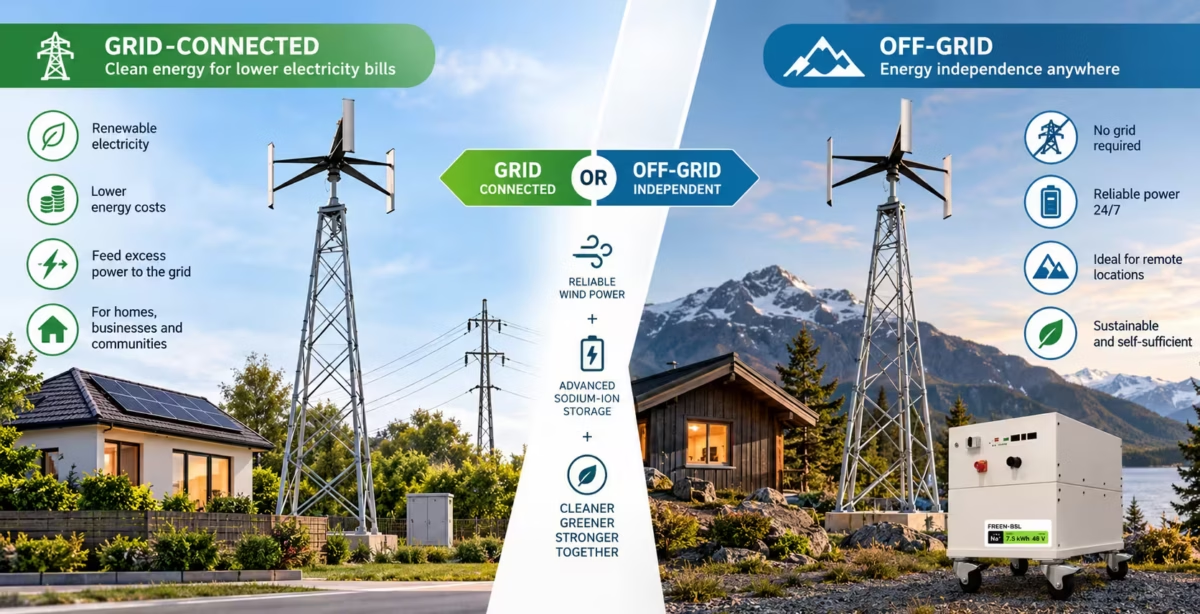
Wind turbine technologies have matured significantly, with vertical axis wind turbines like the Freen series offering reliable, low-maintenance alternatives to fossil fuel generation. Modern systems achieve 20-year lifespans with minimal operational expenses, fundamentally shifting the economic calculus for remote power.
According to the International Renewable Energy Agency (IRENA), small wind systems typically achieve levelized costs of €0.15-€0.35 per kWh depending on site conditions, compared to €0.25-€0.45+ per kWh for diesel generation when fuel delivery costs and European taxes are included – with diesel costs rising sharply in remote locations.
Capital Expenditure: Initial Investment Comparison
Upfront costs represent the most visible difference between wind and diesel systems. However, this comparison requires context about complete system requirements.
A typical Freen-9 turbine system including tower, inverter, and installation costs €25,000-€35,000 for a complete 9 kW installation. The larger Freen-20 at 20 kW capacity ranges from €45,000-€65,000 fully installed.
Diesel generators appear significantly cheaper initially – a 10 kW commercial diesel generator costs €6,000-€12,000. However, this base price excludes critical components:
- • Fuel storage infrastructure – Tanks, containment systems, and safety equipment add €3,000-€8,000
- • Installation and electrical work – Professional installation costs €2,500-€6,000 for either system
- • Permitting and environmental compliance – Diesel systems often require additional permits for fuel storage
- • Backup systems – Wind installations typically include battery storage, while diesel requires fuel inventory
Annual Energy Production: Realistic Expectations
Fair TCO comparison requires equal energy output. A 10 kW diesel generator running at 50% load for 8 hours daily produces approximately 14,600 kWh/year. A Freen-9 turbine’s output depends on site wind conditions, with factory data showing 3,240 kWh/year at average wind speed of 3.48 m/s.
Annual energy production scenarios for Freen-9:
- • Average wind (3.5 m/s) – ~3,240 kWh/year based on factory test data
- • Good wind (6 m/s) – ~10,000 kWh/year at favorable sites
- • Excellent wind (7+ m/s) – ~15,000 kWh/year at premium locations
Site assessment is critical – wind resource quality directly determines economic viability. Professional measurement over 3-12 months provides accurate data for your specific location.
Operational Costs: The Hidden Diesel Burden
Fuel costs dominate diesel generator economics and create unpredictable long-term expenses. Remote locations face particularly severe challenges with fuel delivery costs and supply chain reliability.
A 10 kW diesel generator operating at 50% load consumes approximately 2-3 liters per hour. Running 5.5 hours daily to produce 10,000 kWh/year, annual fuel consumption reaches approximately 4,000-6,000 liters. At €1.40-€1.70 per liter (including delivery to remote European sites), annual fuel costs total €7,000-€8,500.
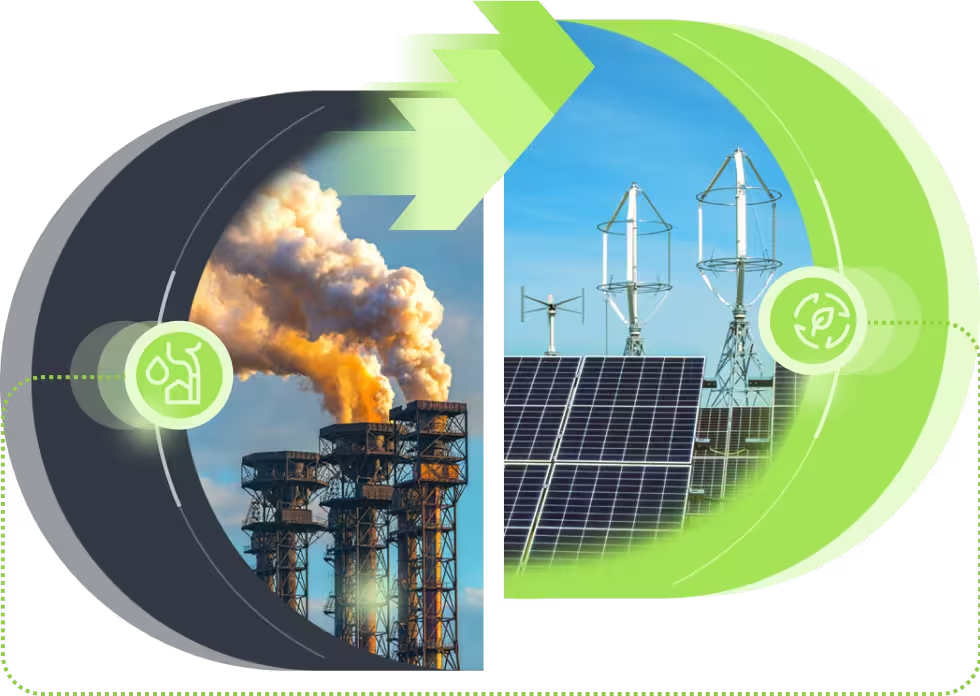
Wind turbines eliminate fuel costs entirely. After installation, small wind turbine operational expenses consist primarily of minimal maintenance and occasional component replacement.
10-year operational cost comparison:
- • Diesel fuel costs – €70,000-€85,000 over 10 years for 10,000 kWh/year output
- • Fuel price volatility – Diesel prices fluctuate 20-40% annually, creating budget uncertainty
- • Delivery and logistics – Remote sites pay 30-50% premiums for fuel delivery
- • Wind turbine fuel costs – €0 – wind energy is free and unlimited
Maintenance and Service Requirements
Maintenance costs diverge significantly between wind and diesel systems. Diesel generators require frequent servicing, oil changes, filter replacements, and eventual major overhauls. Wind turbines feature simpler mechanical systems with longer service intervals.
Freen products utilize gearless direct-drive generators and robust vertical axis designs that minimize wear components. Annual inspections and occasional bearing lubrication represent the primary maintenance requirements.
| Cost to Produce 10,000 kWh/year | Freen-9 (Good Wind) | Diesel 10kW |
| Initial System Cost | €30,000 | €12,000 |
| Fuel Costs (10 years) | €0 | €80,000 |
| Maintenance (10 years) | €3,500 | €14,000 |
| Major Overhaul/Replacement | €0 (20-year lifespan) | €9,000 (year 7-8) |
| Total 10-Year TCO | €33,500 | €115,000 |
| Cost per kWh (10,000 kWh/yr) | €0.33/kWh | €1.15/kWh |
At excellent wind sites (7+ m/s) producing 15,000 kWh/year, Freen-9 achieves approximately €0.22/kWh over 10 years – making the economic advantage even more compelling.
Lifespan and Replacement Cycles
System longevity significantly impacts long-term economics. Quality vertical axis wind turbines like the Freen series operate for 20-25 years with proper maintenance. The direct-drive design eliminates gearbox failures, and robust construction withstands harsh environmental conditions.
Diesel generators typically require major overhaul or complete replacement after 10,000-15,000 operating hours. For systems running 5-8 hours daily, this translates to 3-5 years before significant rebuild costs, and 7-10 years before complete replacement becomes economical.
The Freen turbines feature:
- • 20-year design life – Engineered for long-term reliability with minimal degradation
- • Comprehensive warranty – Coverage on turbine components and electronics
- • No major overhaul required – Simple maintenance extends operational life
- • Weather resistance – IEC Class III/IV certification for harsh environments
Hybrid Systems: Optimizing Economics
Many facilities achieve optimal economics through hybrid configurations combining wind turbines with battery storage and diesel backup. This approach maximizes renewable penetration while maintaining absolute reliability.
Home energy storage systems paired with Freen turbines reduce diesel consumption by 70-90%, dramatically cutting fuel costs while preserving backup capability. Modern sodium-ion batteries offer excellent cycle life and temperature tolerance for hybrid applications.
Hybrid system economics for a typical remote installation:
- • Wind turbine primary – Provides 60-80% of annual energy needs
- • Battery storage – Smooths intermittency, provides 4-8 hours autonomy
- • Diesel backup – Auto-starts only during extended low-wind periods
- • Fuel reduction – 70-90% reduction in most scenarios, up to 95% on high-wind sites with adequate storage
Environmental and Regulatory Costs
Diesel generators face increasing regulatory scrutiny and environmental compliance costs. Carbon pricing mechanisms, emissions regulations, and fuel storage requirements add hidden expenses to diesel operations.
Wind turbines provide zero-emission generation that qualifies for renewable energy incentives, carbon credits, and environmental grants. Many European jurisdictions offer tax credits covering 20-30% of wind turbine installation costs, improving payback periods significantly.
Additional economic considerations favoring wind:
- • Carbon pricing – Diesel generation incurs €60-€90/tonne CO2 costs under EU ETS
- • Noise pollution – Diesel generators face restrictions in residential/commercial zones
- • Fuel spill liability – Environmental cleanup costs from tank leaks average €50,000+
- • ESG compliance – Renewable energy strengthens sustainability reporting and investor relations
Return on Investment and Payback Analysis
Payback periods for wind turbine investments typically range from 5-8 years in favorable wind locations with high electricity or diesel costs. After payback, 12-15 years of low-cost generation provide substantial cumulative savings.
Key factors affecting ROI include:
- • Wind resource quality – Average wind speeds of 6+ m/s optimize economics
- • Displaced energy costs – Higher diesel/electricity prices accelerate payback
- • Available incentives – Tax credits and rebates can reduce payback to 4-6 years
- • System utilization – Higher capacity factors improve returns
For detailed financial modeling specific to your location and energy requirements, review the frequently asked questions or contact Freen’s technical team for a customized TCO analysis.
Real-World Case Studies
Remote telecommunications towers, agricultural operations, and industrial facilities demonstrate consistent TCO advantages for wind versus diesel. A typical remote mining camp replacing 50 kW of diesel generation with Freen-20 turbines achieved 78% fuel reduction, saving €165,000 annually with 6.2-year payback.
Residential and small commercial installations show similar patterns. A farm operation using a Freen-9 turbine for off-grid power eliminated €5,000 annual diesel costs, achieving payback in 6 years with 15+ years of subsequent low-cost energy.
Ready to calculate your total cost of ownership savings?
We can help you assess your site, model 10-year economics, and compare wind versus diesel for your specific application.
Contact us at contact@freen.com for a detailed TCO analysis and ROI projection.