Water utilities face mounting pressure to reduce operational costs while meeting aggressive decarbonisation targets. Pumping stations and treatment plants consume massive amounts of electricity – often representing 80-90% of a utility’s energy bill. Small wind energy turbines offer a practical solution for water infrastructure, delivering measurable cost savings and carbon reduction across both on-grid treatment facilities and remote pumping stations.
The Energy Challenge for Water and Environmental Utilities
Water treatment and distribution are energy-intensive operations. Pumping water from sources, through treatment processes, and into distribution networks requires continuous power. Traditional grid dependence exposes utilities to volatile electricity prices and undermines sustainability commitments. Many facilities operate in remote locations where grid connections are expensive or unreliable.
Small wind turbines address these challenges by providing on-site renewable generation. Unlike solar, wind resources often peak during evening hours and winter months – complementing water demand patterns. Modern vertical-axis designs operate reliably in turbulent conditions common at pumping stations and treatment plants.
Cost Reduction Through On-Site Wind Generation
Installing small wind turbines at water infrastructure sites delivers immediate financial benefits. Grid electricity costs continue rising globally, while wind energy provides fixed-cost power for 20+ years. Water utilities typically see payback periods of 5-8 years on wind installations, with decades of low-cost energy following.
The Freen-9 and Freen-20 turbines are specifically engineered for commercial and industrial applications like water utilities. These systems integrate seamlessly with existing electrical infrastructure, reducing grid consumption without requiring battery storage for on-grid applications.
Key financial advantages include:
- • Reduced electricity bills – Direct offset of pumping and treatment energy costs with on-site generation
- • Protection from price volatility – Fixed energy costs shield budgets from utility rate increases
- • Low operational expenses – Modern turbines require minimal maintenance beyond annual inspections
- • Asset longevity – 20-25 year operational life provides decades of cost savings
On-Grid Treatment Plant Applications
Municipal wastewater treatment plants and water purification facilities represent ideal candidates for small wind turbine installations. These facilities operate continuously with substantial, predictable energy loads. Treatment processes like aeration, pumping, and filtration run 24/7, creating consistent demand that wind generation can offset.
On-grid installations connect directly to facility electrical systems, reducing purchased power without requiring complex storage solutions. Excess generation can often be exported to the grid through net metering arrangements, creating additional revenue streams. The small wind turbines from Freen integrate with standard electrical panels and require no specialized infrastructure.
Treatment plants benefit from wind’s complementary generation profile. Wind speeds often increase during evening hours when solar production drops but treatment processes continue. Winter wind resources remain strong when solar output declines, providing year-round generation that matches utility operations.
Remote Pumping Stations and Hybrid Systems
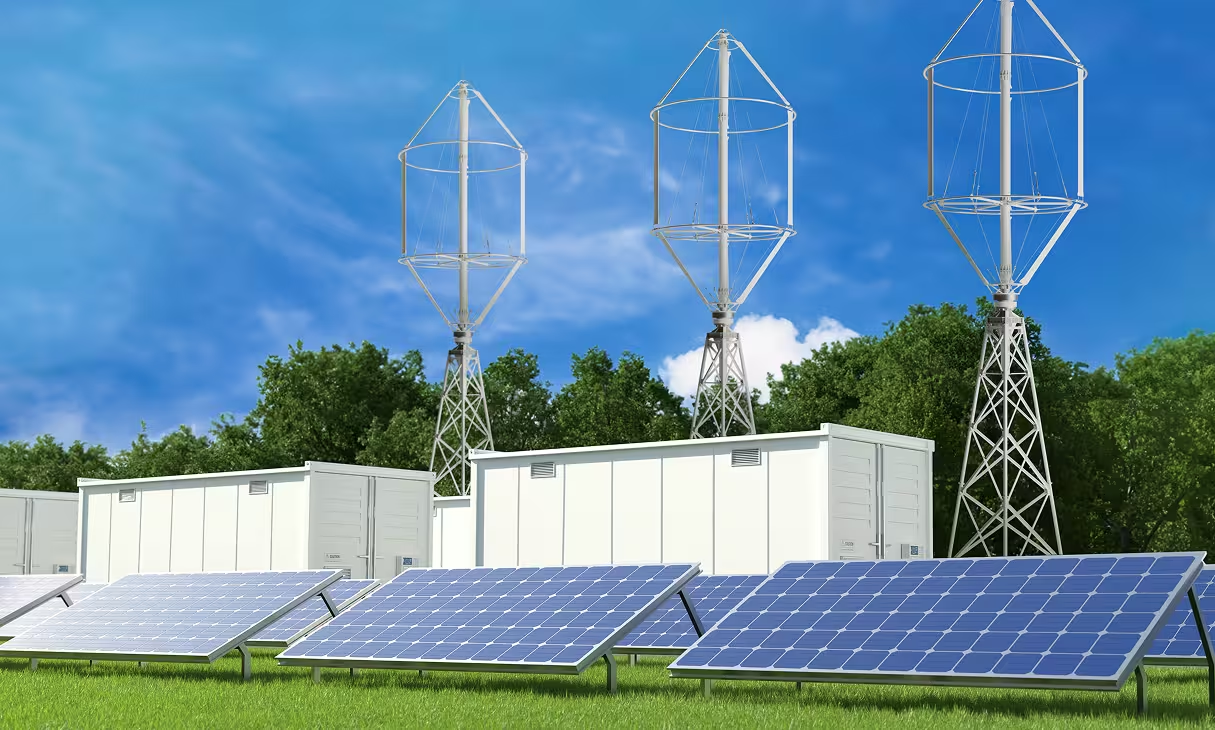
Remote water pumping stations present unique challenges – expensive grid connections, unreliable power supply, or complete dependence on diesel generators. Hybrid wind systems combining turbines with battery storage or solar PV provide reliable, cost-effective power for off-grid locations.
Energy storage integration enables remote pumping stations to operate independently while maintaining service reliability. Modern sodium-ion batteries offer excellent performance in variable temperature conditions common at remote sites, with lower costs and better safety profiles than traditional lithium-ion systems.
Hybrid configurations optimize economics by combining multiple renewable sources:
- • Wind-diesel hybrids – Turbines reduce diesel consumption by 60-80%, cutting fuel costs and maintenance
- • Wind-solar-battery systems – Complementary generation profiles maximize renewable penetration
- • Grid-tied with backup – Primary wind generation with grid or battery backup for reliability
Remote installations particularly benefit from vertical-axis turbine designs that handle turbulent wind conditions and require less maintenance than horizontal-axis systems. The Freen product line available at shop.freen.com includes configurations specifically designed for remote and hybrid applications.
Meeting Decarbonisation Targets and Regulatory Requirements
Water utilities face increasing regulatory pressure to reduce carbon emissions. Many jurisdictions mandate renewable energy procurement or carbon reduction targets for public utilities. On-site wind generation provides direct, verifiable carbon reductions that count toward sustainability goals.
Unlike renewable energy credits or power purchase agreements, owned wind turbines deliver tangible emissions reductions on utility balance sheets. Each kWh generated displaces grid electricity, typically avoiding 0.4-0.6 kg of CO2 emissions depending on local grid mix. A single Freen-20 turbine can offset 40-60 tonnes of CO2 annually.
Sustainability credentials matter for rate cases and public perception. Utilities demonstrating concrete action on climate change build community support and strengthen positions in regulatory proceedings. Wind installations provide visible, measurable proof of environmental commitment.
Funding and Financing Options
Capital constraints often limit renewable energy adoption, but multiple funding mechanisms make wind projects accessible for water utilities:
- • Government grants and incentives – Many regions offer capital grants covering 20-40% of installation costs for renewable energy at public facilities
- • Green bonds – Municipalities can finance wind projects through dedicated environmental infrastructure bonds
- • Energy service companies (ESCOs) – Performance contracts allow utilities to install wind with no upfront capital, paying from achieved savings
- • Low-interest green loans – Development banks and climate funds offer concessional financing for decarbonisation projects
- • Power purchase agreements – Third-party ownership models where developers install and operate turbines, selling power to the utility at fixed rates
Funding availability varies by jurisdiction, but water utilities often qualify for enhanced support given their public service role and significant decarbonisation impact. Exploring available products and speaking with Freen representatives helps identify optimal financing structures.
Implementation Considerations for Water Utilities
Successful wind turbine installations require careful site assessment and planning. Water utilities should evaluate wind resources through on-site monitoring or validated wind maps before committing to projects. Ideal sites have average wind speeds of 5+ m/s at turbine hub height.
Electrical integration complexity varies by application. Simple on-grid systems connect to facility distribution panels with minimal disruption. Remote or hybrid systems require more sophisticated controls but modern inverters and energy management systems handle integration automatically.
Maintenance requirements are modest but essential. Annual inspections, occasional blade cleaning, and bearing lubrication keep systems operating at peak efficiency. Most utilities contract maintenance to installers or regional service providers, requiring minimal staff training.
Permitting and community engagement matter for public utilities. Wind turbines at water facilities typically face fewer objections than residential installations, given industrial character of sites and public benefit of projects. Early stakeholder engagement and professional visual impact assessments smooth approval processes.
Calculating ROI for Your Facility
Return on investment depends on local electricity costs, wind resources, and available incentives. Water utilities should model projects using actual consumption data from pumping stations and treatment plants. Key variables include:
- • Annual energy consumption at target sites
- • Local electricity rates and projected increases
- • Site-specific wind resource assessment
- • Available grants, tax credits, or rebates
- • Installation and interconnection costs
- • Expected turbine performance and degradation
Most water utilities achieve 12-18% internal rates of return on wind projects, with payback periods of 5-8 years. Projects in high electricity cost regions or with strong wind resources see faster payback. Remote sites avoiding diesel generation often achieve 3-5 year payback given high fuel costs.
The Freen team provides detailed feasibility assessments and financial modeling to help utilities evaluate specific opportunities.
Ready to reduce pumping costs and meet your decarbonisation targets? We can help you assess wind resources and model savings for your water utility facilities.
Contact us at contact@freen.com to start your feasibility assessment.