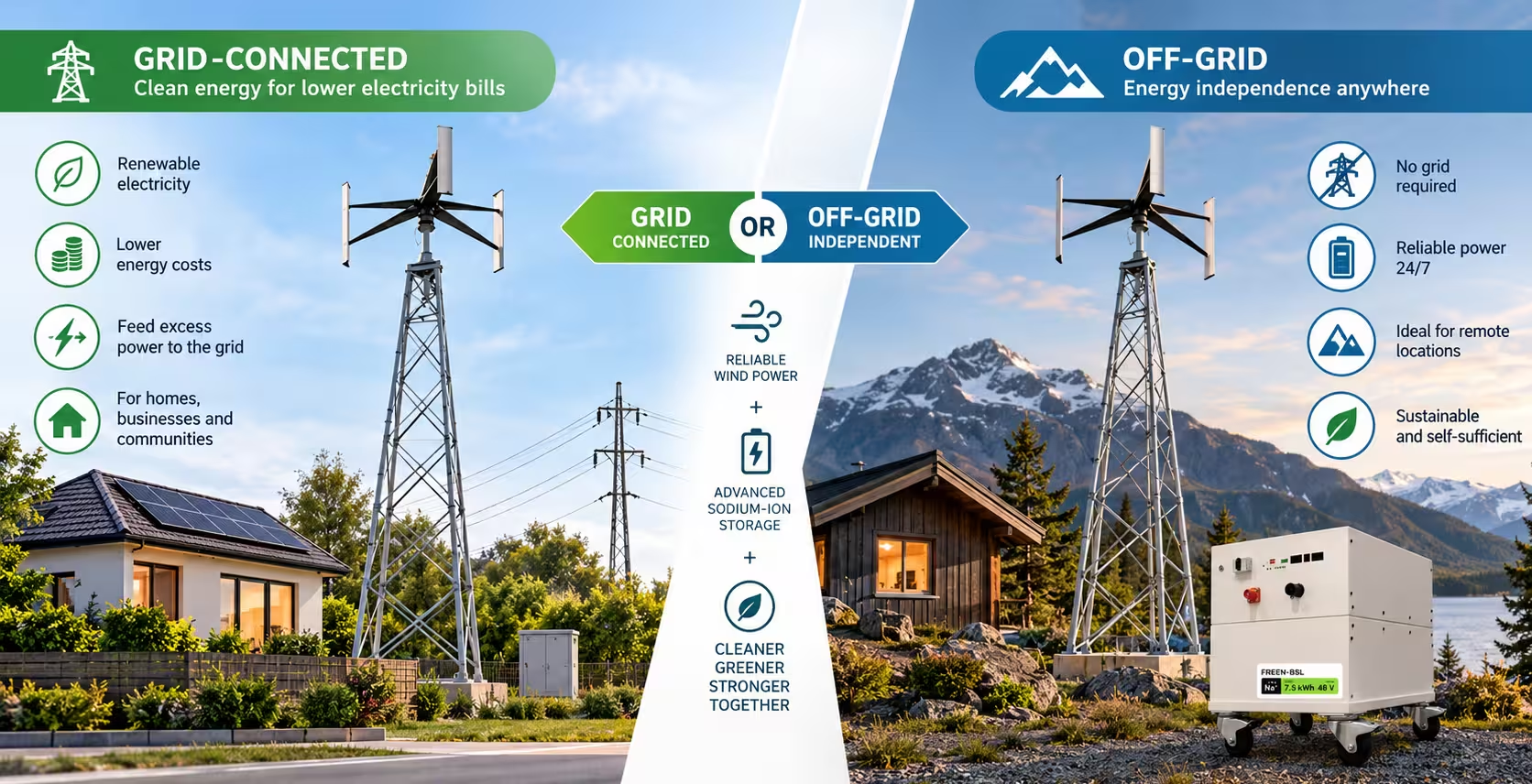
Grid-connected wind systems offer lower upfront costs and net metering benefits, while off-grid installations with sodium-ion battery storage provide complete energy independence but require 2-3x higher initial investment. The right choice depends on your location, grid availability, budget, and energy security priorities. This decision guide compares technical requirements, total costs, and long-term economics of both approaches to help you choose optimally.
Understanding Grid-Connected Wind Systems
Grid-tied (on-grid) small wind turbine systems connect directly to the utility electrical grid, allowing bidirectional power flow. When your turbine generates excess electricity, it feeds back to the grid, often earning credits through net metering programs. During low-wind periods, you draw power from the grid as normal.
This configuration dominates residential and commercial installations where reliable grid infrastructure exists. According to the U.S. Department of Energy, grid-connected small wind systems typically achieve payback periods of 6-12 years depending on local electricity rates and wind resources.
Key advantages of grid-connected systems:
- • Lower initial cost – No battery bank required, reducing system cost by 40-60%
- • Net metering revenue – Excess generation earns credits or payments from utilities
- • Unlimited backup – Grid provides power when wind is insufficient
- • Simpler installation – Fewer components mean easier permitting and commissioning
- • Higher efficiency – Direct grid export avoids battery round-trip losses (typically 3-7%)
The Freen-9 turbine in grid-tied configuration can offset 60-100% of average household consumption while exporting surplus during high-wind periods. However, grid-tied systems shut down during grid outages unless paired with battery backup, limiting energy security benefits.
Off-Grid Wind Systems: Complete Energy Independence
Off-grid (standalone) wind systems operate independently of utility infrastructure, requiring battery storage to ensure continuous power supply. These installations serve remote locations without grid access or properties prioritizing complete energy autonomy.
Off-grid systems demand careful sizing to balance generation, storage capacity, and consumption patterns. A typical residential installation requires 2-3 days of battery autonomy to weather calm periods, significantly increasing capital costs but eliminating monthly electricity bills permanently.
Freen-20 turbines paired with sodium-ion battery banks provide reliable off-grid power for remote homes, agricultural operations, and telecommunications sites. Modern home energy storage technology enables 80-95% renewable energy penetration even with variable wind resources.
Critical off-grid system components:
- • Wind turbine – Primary generation source sized for average consumption
- • Battery bank – 2-5 days energy storage (typically 20-60 kWh for homes)
- • Charge controller – Regulates battery charging and prevents overcharge
- • Inverter – Converts DC battery power to AC for household use
- • Backup generator – Optional diesel/propane generator for extended low-wind periods
Comparative Analysis: Grid-Tied vs. Off-Grid
Understanding the fundamental differences between grid-connected and off-grid systems enables informed decision-making. The choice involves trade-offs between cost, complexity, reliability, and independence.
| Factor | Grid-Connected | Off-Grid |
| Initial Investment | €25,000-€40,000 (9 kW system) | €45,000-€75,000 (with batteries) |
| Battery Requirement | Optional (for backup only) | Mandatory (20-60 kWh typical) |
| Monthly Costs | Grid connection fee €10-€30 | €0 (complete independence) |
| Energy Security | Depends on grid reliability | 100% independent |
| Maintenance Complexity | Low (turbine only) | Moderate (turbine + batteries) |
| System Lifespan | 20-25 years (turbine) | 20+ years (turbine), 10+ years (batteries) |
| Best For | Grid-available locations, budget-conscious | Remote sites, energy independence seekers |
Battery Storage: The Off-Grid Game Changer
Battery technology fundamentally determines off-grid system performance, cost, and reliability. Traditional lithium-ion batteries dominated for years, but sodium-ion batteries now offer compelling advantages for wind energy storage, particularly in harsh climates.
Sodium-ion chemistry excels in extreme temperature tolerance, operating reliably from -30°C to +60°C without performance degradation. This capability proves critical for off-grid installations in northern climates where lithium batteries lose 30-50% capacity below -10°C.
Freen offers two sodium-ion battery series optimized for different applications:
| Specification | Freen-BSL (Low Voltage) | Freen-BSH (High Voltage) |
| Usable Energy | 7.6 kWh | 10 kWh |
| Max Power Output | 4.8 kW | 5 kW |
| Operating Voltage | 48V (safer, easier installation) | 288V (higher efficiency) |
| Discharge Temperature Range | -40°C to +60°C | -40°C to +60°C |
| Cycle Life | >10,000 cycles (60% SOH) | >10,000 cycles (60% SOH) |
| Round-Trip Efficiency | >97% | >97% |
| Warranty | 10 years | 10 years |
Both systems feature natural convection cooling, eliminating fan maintenance and noise. The Freen-BSL’s 48V architecture suits smaller installations and DIY enthusiasts, while the high-voltage BSH optimizes efficiency for larger systems. Download detailed specifications: Freen-BSL datasheet and Freen-BSH datasheet.
Browse available battery configurations at Freen shop to compare pricing and bundle options with wind turbines.
Hybrid Systems: Best of Both Worlds
Hybrid grid-tied systems with battery backup combine grid connectivity with energy storage, offering energy security during outages while maintaining net metering benefits. This configuration costs 30-50% more than basic grid-tied but provides critical backup power.
During normal operation, hybrid systems function like standard grid-tied installations, exporting excess generation. When the grid fails, the system automatically islands, drawing from batteries to power essential loads until grid restoration.
Ideal hybrid applications include:
- • Unreliable grid areas – Frequent outages justify battery investment
- • Time-of-use optimization – Store solar/wind energy for peak-rate consumption
- • Emergency preparedness – Critical loads (refrigeration, medical equipment, communications)
- • Future off-grid transition – Phased approach to complete independence
Decision Framework: Which System Fits Your Situation?
Choosing between grid-connected, off-grid, and hybrid systems requires evaluating multiple factors specific to your location, budget, and priorities.
Ask these critical questions:
- • Is grid power available? – Remote sites (>1 km from grid) favor off-grid; grid-available locations typically benefit from grid-tied
- • What’s your budget? – Grid-tied requires 40-60% less capital; off-grid needs €20,000-€40,000 additional for batteries
- • How reliable is your grid? – Frequent outages (>10/year) justify hybrid or off-grid
- • What are your energy independence goals? – Environmental values or security concerns may outweigh pure economics
- • What net metering policies exist? – Favorable feed-in tariffs improve grid-tied economics
Economic Comparison: 10-Year Total Cost of Ownership
Long-term financial analysis reveals true system economics beyond initial purchase price. Grid-tied systems benefit from lower upfront costs and net metering revenue, while off-grid eliminates electricity bills entirely but requires battery replacement.
Typical 10-year TCO for a household consuming 10,000 kWh/year:
- • Grid-tied (no batteries) – €30,000 initial + €3,000 grid fees – €5,000 net metering = €28,000 total
- • Hybrid (with 10 kWh battery) – €45,000 initial + €2,000 grid fees – €3,000 net metering = €44,000 total
- • Off-grid (with 30 kWh battery bank) – €60,000 initial + €5,000 battery replacement = €65,000 total (but €0 electricity bills)
Off-grid becomes economically competitive when grid connection costs exceed €15,000 or electricity rates exceed €0.25/kWh. For detailed financial modeling, review the frequently asked questions or consult with Freen’s technical team.
Technical Considerations for Small Wind Turbines
Small wind turbine technology has matured significantly, with modern wind turbine technologies achieving 20-25 year lifespans and minimal maintenance requirements. Vertical axis designs like Freen-9 and Freen-20 excel in turbulent wind conditions common at residential sites.
Both grid-tied and off-grid systems require:
- • Average wind speed ≥5 m/s – Professional site assessment recommended
- • Zoning compliance – Check height restrictions and setback requirements
- • Utility interconnection agreement – Required for grid-tied systems (permits take 2-8 weeks)
- • Professional installation – Certified electricians ensure code compliance and safety
Making Your Final Decision
The optimal choice balances economics, reliability, and personal values. Grid-connected systems suit budget-conscious buyers with reliable grid access and favorable net metering policies. Off-grid installations serve remote properties and energy independence prioritizers willing to pay premium upfront costs for long-term autonomy.
Hybrid systems offer middle ground, providing backup power during outages while maintaining grid benefits. As sodium-ion battery costs decline and performance improves, hybrid and off-grid economics continue strengthening.
For personalized system design and site assessment, contact contact@freen.com to discuss your specific requirements and receive a detailed proposal.
Ready to choose between grid-connected and off-grid wind?
We can help you assess your site, compare system configurations, and design the optimal solution for your energy goals and budget.
Contact us at contact@freen.com for a free consultation and detailed system proposal.