Investing in a small vertical axis wind turbine represents a significant commitment to renewable energy independence. With numerous options available and substantial price variations, buyers need clear guidance to make informed decisions. This comprehensive guide covers essential specifications, installation requirements, and critical questions to ask suppliers before purchasing vertical axis wind turbines for your home or business.
Understanding Vertical Axis Wind Turbine Technologies
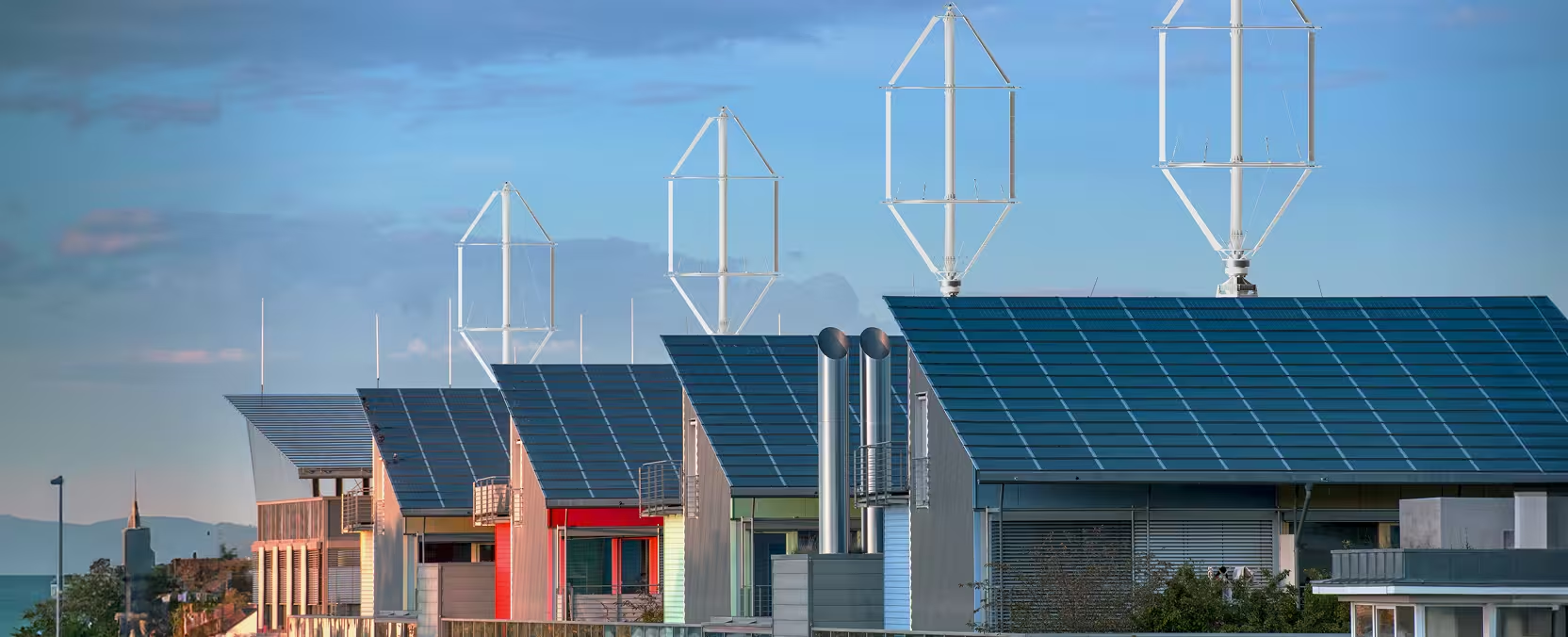
Vertical axis wind turbines (VAWTs) differ fundamentally from traditional horizontal-axis designs. The rotor shaft orientation allows VAWTs to capture wind from any direction without requiring yaw mechanisms or repositioning. This omni-directional capability makes them ideal for turbulent wind conditions common in urban, coastal, and built-up environments.
Modern wind turbine technologies have addressed historical efficiency concerns with vertical designs. Contemporary VAWTs like the Freen series achieve competitive performance while offering superior reliability in variable wind conditions. The Darrieus rotor design, used in Freen-9 and Freen-20 models, provides excellent efficiency with minimal maintenance requirements.
Key advantages of vertical axis wind turbines include:
- • Omni-directional operation – No need to track wind direction or reposition the turbine
- • Lower cut-in wind speeds – Begin generating power at 3-4 m/s versus 5-6 m/s for horizontal turbines
- • Quieter operation – Slower rotor speeds and vertical design reduce noise pollution
- • Easier maintenance – Ground-level generator and gearbox access simplifies servicing
- • Better urban performance – Handle turbulent, multi-directional winds from buildings and obstacles
Essential Specifications Checklist
Before purchasing any small wind turbine, buyers should evaluate specific technical parameters that directly impact performance and return on investment. Don’t rely solely on rated power – real-world performance depends on multiple factors.
Rated power indicates maximum output under ideal conditions, but annual energy production matters more for financial calculations. A 9 kW turbine like the Freen-9 produces substantial power across varying wind speeds, while the 20 kW Freen-20 serves larger energy demands.
Critical specifications to compare:
- • Cut-in wind speed – Minimum wind speed for power generation (3.5 m/s is excellent)
- • Rated wind speed – Wind speed at which rated power is achieved (typically 12-15 m/s)
- • Survival wind speed – Maximum wind the turbine can withstand without damage (36 m/s or higher)
- • Power curve – Graph showing output at different wind speeds – request actual test data
- • Noise level – Should be 45 dB or less at 100 meters for residential areas
- • Temperature range – Ensure operation within your climate extremes (-25°C to +40°C covers most regions)
Installation Requirements and Site Assessment
Proper site assessment prevents costly mistakes. Wind resource quality varies dramatically even within small geographic areas. Professional measurement over 3-12 months provides accurate data, though validated wind maps and nearby meteorological stations offer reasonable estimates for preliminary evaluation.
Average wind speeds of 5 m/s or higher at hub height make small wind turbines economically viable. Below 4 m/s, solar PV typically delivers better returns. Between 4-5 m/s, hybrid wind-solar systems often optimize investment.
Installation considerations include:
- • Zoning and permits – Check local height restrictions, setback requirements, and noise ordinances
- • Structural support – Tower foundation must handle dynamic loads from rotor and wind pressure
- • Electrical interconnection – Grid-tied systems require utility approval and appropriate inverters
- • Access for maintenance – Ensure safe access to turbine and tower for periodic servicing
- • Clearance from obstacles – Install at least 10 meters above nearby structures and trees
Comparing Small Wind Turbine Options
The market offers numerous vertical axis wind turbines for sale, ranging from hobbyist units to commercial-grade systems. Price typically correlates with build quality, warranty support, and performance verification.
When evaluating available products, consider the total cost of ownership rather than just purchase price. A turbine costing 20% more but lasting twice as long delivers superior value. Similarly, systems with comprehensive warranties and local service support reduce long-term risk.
Residential applications typically require 5-10 kW systems, while small commercial operations may need 15-25 kW capacity. The Freen-9 serves typical homes with moderate electricity consumption, whereas the Freen-20 suits larger properties, small farms, or businesses with higher energy demands.
Integration with Energy Storage Systems
Hybrid systems combining wind turbines with battery storage maximize energy independence and financial returns. Excess generation charges batteries during high-wind periods, providing power during calm conditions and peak-rate hours.
Home energy storage integration requires compatible inverters and charge controllers. Modern sodium-ion batteries offer advantages for wind applications: they tolerate variable charging patterns from intermittent wind, operate reliably across wide temperature ranges, and present minimal safety risks compared to lithium-ion alternatives.
Battery sizing should match your consumption patterns and backup requirements. A typical residential installation pairs a 9 kW turbine with 10-20 kWh of storage, achieving 60-80% energy self-sufficiency in favorable wind locations.
Key Questions to Ask Suppliers
Before committing to a purchase, ask potential suppliers specific questions that reveal product quality and company reliability. Reputable manufacturers provide detailed documentation and transparent performance data.
Essential questions include:
- • What certifications does the turbine hold? – IEC 61400 certification indicates independent testing and compliance with international standards
- • What warranty coverage is provided? – Look for 5+ years on turbine components and 2+ years on electronics
- • Can you provide verified performance data? – Request third-party test reports, not just manufacturer claims
- • What maintenance is required? – Annual inspections should suffice; frequent servicing indicates design issues
- • Is local technical support available? – Response time matters when systems malfunction
- • What is the expected lifespan? – Quality turbines operate 20+ years with proper maintenance
Understanding Pricing and ROI
Small vertical axis wind turbines for sale range from $5,000 for basic 3 kW systems to $50,000+ for commercial-grade 20+ kW installations. Complete installed systems typically cost $3,000-$5,000 per kW of capacity, including tower, inverter, and installation.
Return on investment depends on local electricity costs, wind resources, and available incentives. High electricity cost regions (above $0.20/kWh) with good wind resources (6+ m/s average) achieve 5-8 year payback periods. Moderate locations see 8-12 year returns, still favorable given 20-year system lifespans.
Government incentives significantly improve economics. Many jurisdictions offer tax credits, rebates, or accelerated depreciation for renewable energy systems. Net metering policies allowing grid export at retail rates enhance financial returns.
Common Pitfalls to Avoid
Buyers often make costly mistakes when purchasing small wind turbines. Understanding these pitfalls helps ensure successful projects.
Overestimating wind resources ranks as the most common error. Urban and suburban sites frequently have lower wind speeds than regional averages suggest due to building and tree interference. Professional site assessment prevents disappointment.
Underestimating installation complexity creates budget overruns. Tower foundations, electrical work, and grid interconnection often cost as much as the turbine itself. Obtain detailed installation quotes before purchasing.
Choosing based solely on price sacrifices long-term value. Cheap turbines from unknown manufacturers may lack performance verification, warranty support, or spare parts availability. Established brands with proven track records reduce risk.
Ignoring local regulations causes project delays or cancellations. Research zoning requirements, building permits, and utility interconnection procedures before ordering equipment.
Making Your Final Decision
After evaluating specifications, site conditions, and supplier credentials, compare total project costs against expected energy production and financial returns. Request detailed proposals from multiple suppliers including equipment, installation, and long-term support.
Review the frequently asked questions section on manufacturer websites for additional insights. Speak with existing customers if possible to learn about real-world performance and service quality.
Remember that the best small vertical wind turbine for your situation balances performance, reliability, cost, and support. A slightly higher initial investment in quality equipment from a reputable supplier typically delivers superior long-term value compared to the lowest-priced option.
Ready to choose the right vertical axis wind turbine for your needs?
Our team can help you assess your site, compare options, and select the optimal system for your energy goals and budget.
Contact us at contact@freen.com for a free consultation and detailed proposal.