Rail networks, seaports, and airports represent some of the most energy-intensive infrastructure assets in modern economies. These facilities face mounting pressure to reduce carbon emissions while maintaining operational reliability. Small wind energy turbines offer a practical solution for transport infrastructure, leveraging the naturally exposed locations of trackside corridors, port facilities, and airport perimeters to generate clean, cost-effective power.
The Exposed-Site Advantage for Transport Infrastructure
Transport corridors inherently occupy exposed locations with favorable wind resources. Railway lines traverse open countryside and elevated embankments. Ports sit on coastlines with consistent sea breezes. Airports require clear approaches that eliminate wind obstructions. These characteristics make transport infrastructure ideal candidates for small wind turbine installations.
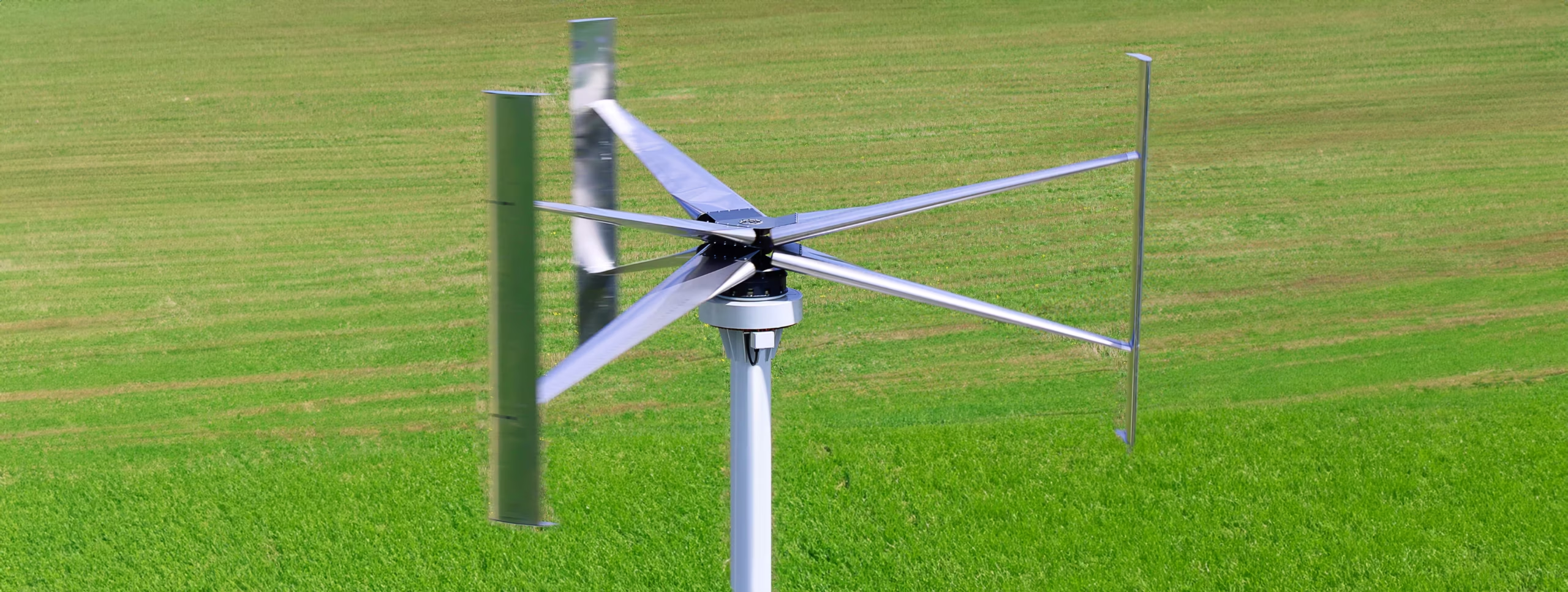
Unlike urban or forested sites where wind resources are compromised by obstacles, transport assets benefit from unobstructed airflow. Vertical axis wind turbines excel in these environments, handling turbulent conditions from passing trains, ship movements, and aircraft operations while maintaining reliable generation.
The small wind turbines designed for commercial applications can integrate seamlessly with existing transport infrastructure, utilizing available space along tracks, on port quaysides, or around airport perimeters without disrupting operations.
Off-Grid Trackside Applications
Railway networks extend thousands of kilometers through remote areas where grid connections are expensive or unavailable. Trackside equipment including signaling systems, level crossing barriers, communication towers, and remote monitoring stations require reliable power supplies.
Small wind turbines provide autonomous power generation for off-grid trackside assets. Combined with battery storage, these systems eliminate the need for diesel generators, reducing maintenance visits, fuel delivery costs, and environmental risks from fuel spills in sensitive areas.
Key trackside applications include:
- • Signaling and communications – Continuous power for critical safety systems without grid dependence
- • Level crossing equipment – Reliable operation of barriers, lights, and warning systems
- • Remote monitoring stations – Power for track condition sensors and weather monitoring
- • Emergency systems – Backup power for evacuation lighting and communication during outages
Wind technology proves particularly valuable in northern climates where solar generation drops during winter months but wind resources remain strong, ensuring year-round reliability for critical rail infrastructure.
On-Grid Port and Airport Installations
Seaports and airports operate as energy hubs with substantial electricity consumption for lighting, cargo handling, terminal operations, and ground support equipment. On-grid wind turbine installations reduce purchased power while demonstrating environmental leadership.
Port facilities benefit from consistent coastal winds and available space on breakwaters, storage areas, and administrative buildings. Modern wind turbine technologies integrate with port electrical systems, reducing energy costs while maintaining grid connection for reliability.
Airports present unique opportunities with extensive perimeter land, clear wind corridors, and strong sustainability commitments. Wind turbines installed on airport property generate power for terminal operations, runway lighting, and ground support systems while contributing to carbon reduction targets.
Both ports and airports benefit from visible renewable energy installations that reinforce environmental credentials with customers, regulators, and local communities.
EU Transport Decarbonisation Funding Pathways
The European Union prioritizes transport decarbonisation through multiple funding mechanisms. The Connecting Europe Facility, Cohesion Fund, and Recovery and Resilience Facility allocate billions for sustainable transport infrastructure, including renewable energy integration.
Rail operators can access funding for electrification projects that incorporate on-site renewable generation. Port authorities qualify for green port initiatives supporting shore power and renewable energy installations. Airports pursuing carbon neutrality certifications receive support for renewable energy procurement.
Funding applications strengthen when projects demonstrate measurable emissions reductions, operational cost savings, and alignment with EU climate targets. Small wind turbine installations at transport facilities check all these boxes while providing tangible, visible sustainability improvements.
Integration with Energy Storage Systems
Transport infrastructure requires uninterrupted power for safety-critical systems. Wind generation combined with energy storage ensures continuous operation during low-wind periods and grid outages.
Home energy storage technology scaled for commercial applications provides hours of backup power for essential systems. Modern sodium-ion batteries offer particular advantages for transport applications: they operate reliably across wide temperature ranges, tolerate frequent charge-discharge cycles, and present minimal fire risk in safety-critical environments.
Hybrid wind-battery systems for transport infrastructure include:
- • Primary generation – Wind turbines provide baseline power during favorable conditions
- • Short-term storage – Battery bank smooths intermittency and provides instant backup
- • Grid connection – Utility power serves as tertiary backup when needed
- • Smart controls – Energy management systems optimize source selection and ensure priority loads remain powered
Implementation Considerations for Transport Assets
Installing wind turbines on transport infrastructure requires careful planning to avoid operational disruptions. Rail installations must coordinate with train schedules and safety protocols. Port installations require consideration of cargo operations and vessel movements. Airport installations must comply with aviation safety regulations regarding height restrictions and radar interference.
Structural assessments ensure towers and foundations can withstand dynamic loads from wind, vibration, and environmental conditions. Electrical integration connects turbine output to facility distribution systems with appropriate protection and control equipment.
Maintenance access planning ensures technicians can service turbines without disrupting transport operations. Remote monitoring capabilities reduce the need for physical site visits, particularly valuable for remote trackside installations.
Measuring Success and Reporting Impact
Transport operators benefit from quantifying renewable energy contributions to sustainability targets. Wind turbine monitoring systems provide accurate generation data for carbon accounting and regulatory reporting.
Annual energy production from small wind turbines directly reduces Scope 2 emissions from purchased electricity. This measurable impact supports sustainability reports, carbon disclosure submissions, and regulatory compliance documentation.
Financial benefits include reduced electricity costs, protection from energy price volatility, and potential revenue from excess generation export. Combined with available funding and incentives, wind installations at transport facilities typically achieve attractive returns while advancing decarbonisation goals.
Ready to power your transport infrastructure with renewable wind energy?
We can help you assess wind resources, design hybrid systems, and navigate funding opportunities for your rail, port, or airport project.
Contact us at contact@freen.com to start your transport energy assessment.